If you’re facing treatment-resistant depression, ketamine offers rapid relief where standard antidepressants fall short. It works as an NMDA receptor antagonist, triggering a glutamate surge in your prefrontal cortex that activates AMPA receptors and restores synaptic connections. You’ll often notice symptom relief within 40 minutes, peaking around 24 hours after a single infusion. Available as IV ketamine or FDA-approved intranasal esketamine, it’s reserved for after two failed trials. Here’s what you need to know.
Key Takeaways
- Ketamine blocks NMDA receptors, triggering glutamate release and AMPA activation that initiate synaptic plasticity pathways linked to recovery.
- It works rapidly through the glutamate system, with symptom relief beginning around 40 minutes and peaking near 24 hours.
- Unlike traditional serotonin-targeting antidepressants, ketamine restores synaptic connections through a distinct, faster-acting mechanism.
- Available as IV ketamine (49.22% symptom reduction) and FDA-approved intranasal esketamine (Spravato, 39.55% reduction) for hard-to-treat depression.
- Real-world outcomes show a 45% response rate and 30% remission rate, offering relief when standard therapies fail.
How does ketamine help treatment-resistant depression
Ketamine relieves treatment-resistant depression by acting as a non-competitive NMDA receptor antagonist, blocking glutamate signaling on GABAergic interneurons. Unlike traditional antidepressants that target serotonin, ketamine works through a fundamentally different mechanism. This triggers glutamate release from your prefrontal cortex, activating AMPA receptors and initiating downstream synaptic plasticity pathways. This glutamate system activation confirms the neurotransmitter’s active role in treatment-resistant depression pathophysiology.
What sets ketamine for depression apart is speed. You’ll notice antidepressant effects within hours rather than the weeks standard medications require. Symptom relief begins approximately 40 minutes after administration, with peak mood improvement at 24 hours following a single infusion. Because ketamine therapy restores synaptic connections through an entirely distinct pathway, it addresses depression that’s resisted conventional approaches.
What is treatment-resistant depression
Treatment-resistant depression, or TRD, describes a form of major depression that doesn’t respond to standard therapies. You’re typically diagnosed with TRD when you’ve failed at least two adequate trials of conventional antidepressants. This resistance to standard depression treatment leaves you facing persistent symptoms, functional impairment, and often heightened suicidality. Treating resistant depression requires a comprehensive approach that often includes a combination of therapies.
Traditional antidepressants target monoamine systems like serotonin, but they can take weeks to show effects, and for you, they simply don’t work well enough. That’s where ketamine treatment enters the picture. Because it’s not a first-line option, ketamine’s reserved specifically for cases like yours, where other therapies have failed. Recognizing TRD helps explain why this rapid-acting alternative matters so much.
How does ketamine work in the brain
Ketamine works through the brain’s glutamate system to produce rapid effects, unlike traditional antidepressants that slowly modulate serotonin. When you receive ketamine, it acts as a non-competitive NMDA receptor antagonist, blocking glutamate signaling on GABAergic interneurons. This blockade triggers a surge of glutamate release from your prefrontal cortex. That released glutamate then activates AMPA receptors, initiating downstream synaptic plasticity pathways that appear central to recovery.
This glutamate system activation confirms the neurotransmitter’s active role in treatment-resistant depression’s pathophysiology. Because ketamine bypasses the slow serotonin route, you’ll notice antidepressant effects within hours rather than the weeks traditional medications require. By directly modulating glutamate signaling and restoring synaptic connections, ketamine offers a fundamentally different mechanism, one that explains its speed and effectiveness where other treatments have failed.
What forms of ketamine treatment are available
Ketamine treatment comes in two primary forms: intravenous (IV) ketamine and intranasal esketamine. IV ketamine delivers greater efficacy, producing a 49.22% reduction in depression scores compared to 39.55% for intranasal esketamine. The FDA approved esketamine (Spravato) nasal spray for hard-to-treat depression in 2019, but only for patients who’ve failed at least two other antidepressants. You’ll also need to combine esketamine with an oral antidepressant, since it requires this pairing for clinical benefit. Understanding the various ways to treat depression is crucial for those seeking relief. Recent studies highlight the importance of personalized approaches, as different treatments may work better for different individuals.
| Treatment Form | Key Detail |
|---|---|
| IV ketamine | 49.22% symptom reduction |
| Intranasal esketamine | 39.55% symptom reduction |
| FDA approval | Esketamine, 2019 |
| Eligibility | Two prior antidepressant failures |
| Requirement | Oral antidepressant combination |
What happens during a ketamine treatment session

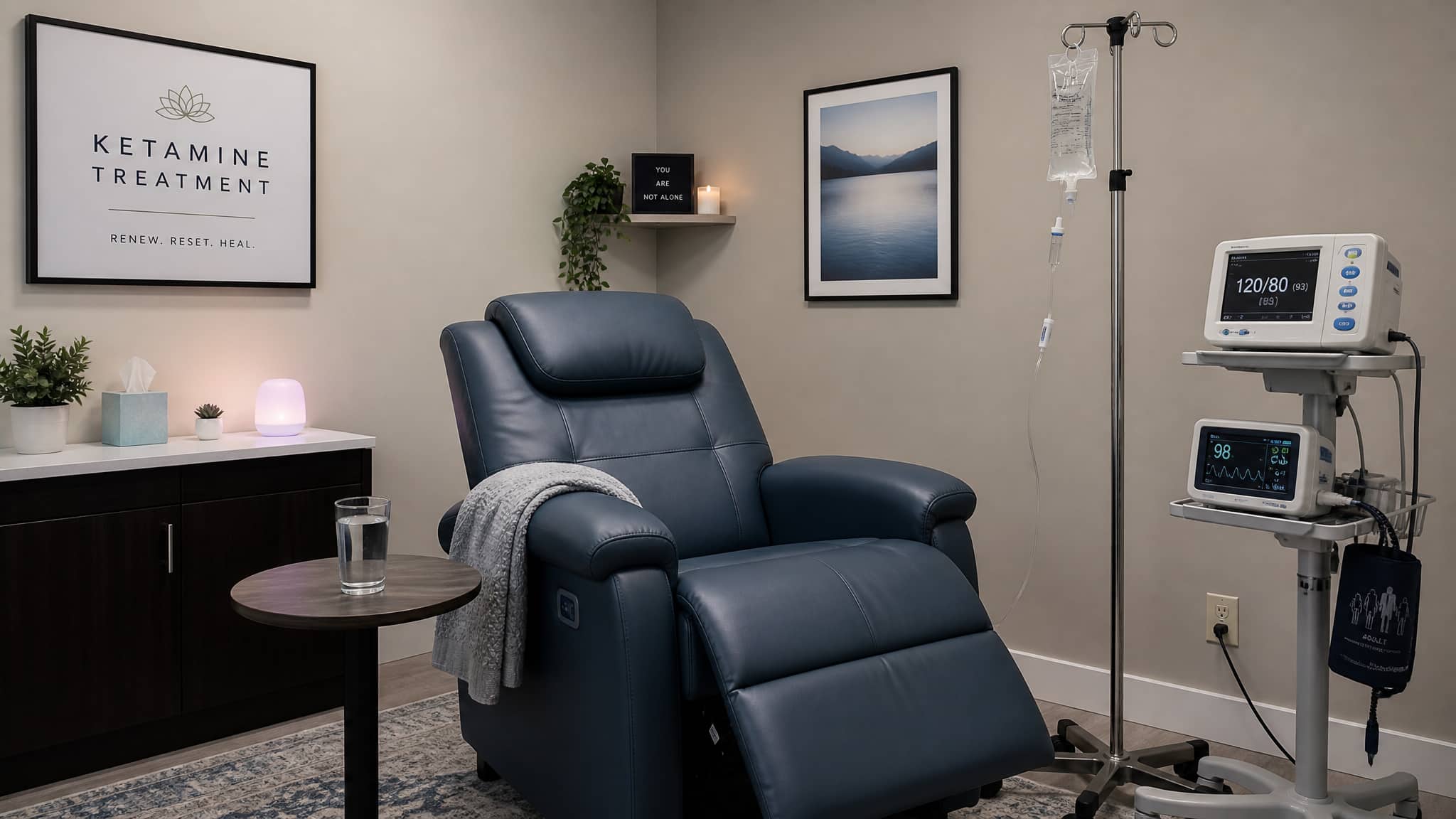
During a ketamine treatment session, symptom relief typically begins about 40 minutes after administration, though the treatment itself unfolds over a carefully monitored window. You’ll receive a single intravenous dose of 0.5mg/kg, with initial effects emerging around four hours and peak mood improvement occurring at 24 hours. During the session, your care team monitors you for common side effects, including dissociation, intoxication, sedation, increased blood pressure, and dizziness. You might also experience headache, blurred vision, anxiety, nausea, or vomiting. These adverse effects are generally mild and self-limited, though more complex reactions require close observation. You’ll remain supervised throughout, since ketamine’s psychoactive properties demand clinical oversight. Importantly, ketamine’s considered safe even if you’re experiencing suicidal ideation, making monitored administration both practical and protective.
How effective and safe is ketamine for depression
Ketamine is both effective and safe for depression. In clinical trials, 55% of patients achieved at least 50% symptom improvement, compared to 41% with ECT. Real-world data show a 45% response rate and 30% remission rate in treatment-resistant depression. After three infusions over 11 days, 52% of participants achieved remission. You’ll likely notice relief within hours, not weeks. When doctors use ECT, they often consider the potential for side effects, which can include memory loss and cognitive difficulties. These concerns can lead patients to explore alternative treatments like ketamine.
Regarding safety, 55% of patients experienced sustained improvement without major side effects. You might encounter dissociation, sedation, high blood pressure, dizziness, nausea, or headache, but these effects are generally mild and self-limited. Importantly, ketamine’s considered safe even if you’re experiencing suicidal ideation, though complex effects require proper monitoring during and after your treatment.
How do you access ketamine treatment
You won’t find ketamine as a first-line treatment. You’ll access it only after other therapies fail. Clinically, ketamine isn’t prescribed until you’ve tried standard antidepressants and haven’t responded adequately.
Your fastest regulated path is esketamine (Spravato), the FDA-approved nasal spray cleared in 2019 for hard-to-treat depression. You’ll qualify only if you’ve failed at least two other antidepressants. You must combine esketamine with an oral antidepressant, since it requires that pairing for clinical benefit.
Because side effects like dissociation, sedation, and increased blood pressure need monitoring, you’ll receive treatment in a supervised clinical setting rather than at home. Talk with your provider about eligibility, administration method, and whether intravenous ketamine or intranasal esketamine suits you.
Call Today and Find a New Path Forward
Treatment resistant depression deserves options beyond the standard approaches, and modern therapies bring genuine hope. Through National Depression Hotline serving Louisiana, our trained professionals are available 24/7 who can guide you toward the right Depression Treatment program built around your goals. Call +1 (866) 629-4564 today and begin a healthier chapter in your life.
Frequently Asked Questions
Can Ketamine Treatment Be Combined With Therapy or Counseling?
Yes, and it often works best that way. Many programs pair ketamine with therapy so you can process insights and build lasting coping skills. Therapy helps extend the benefits between and after sessions. Your treatment team can guide how to combine the two for your situation.
Is Ketamine Addictive When Used for Depression?
Used in a medical setting at controlled doses, the risk is low, but ketamine does have misuse potential, so it’s given under close supervision. Providers screen for a history of substance use and monitor treatment carefully. Following the program as prescribed keeps it safe.
Can Pregnant or Breastfeeding Women Receive Ketamine Treatment?
Ketamine generally isn’t recommended during pregnancy or breastfeeding because there isn’t enough safety data, and other treatments are usually preferred. This is a decision to make with your psychiatrist and obstetrician, who can weigh your options. Don’t start or continue ketamine while pregnant or nursing without their guidance.
How Quickly Does Ketamine Work for Depression?
One reason ketamine draws interest is its speed. Some people feel relief within hours to a few days, much faster than standard antidepressants that take weeks. The effect can fade, though, which is why it’s given as a series of sessions and often paired with other treatment to help it last.
How Much Does Ketamine Treatment Typically Cost?
Costs vary widely by clinic, format, and how many sessions you need, and insurance coverage is inconsistent, especially for infusions. Some clinics offer packages or payment plans. Ask the provider for a clear breakdown of per-session and full-course costs, and check what, if anything, your insurance will cover.