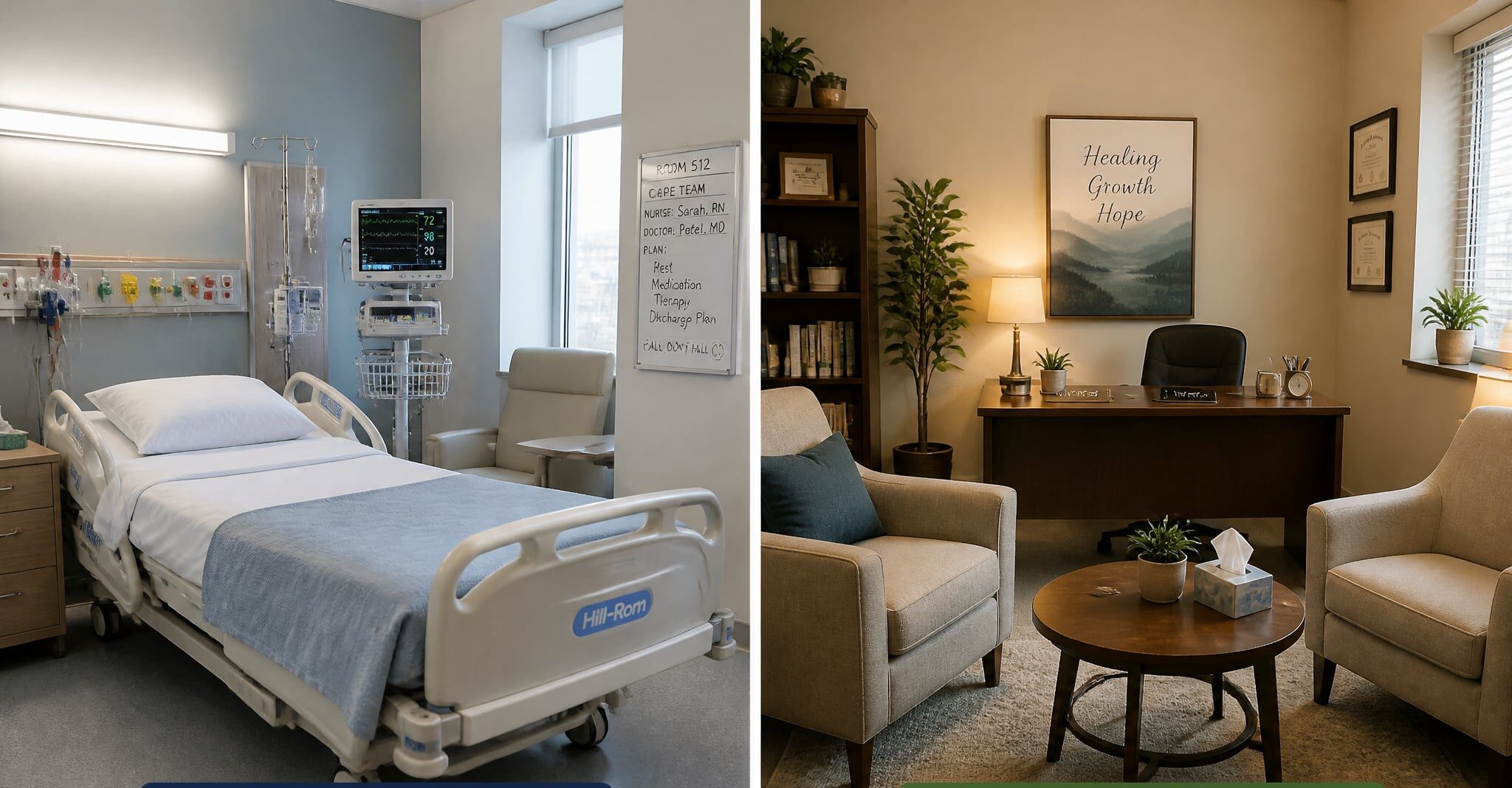
Choosing between inpatient and outpatient care for severe depression depends on your clinical acuity, not the setting itself. Inpatient care gives you 24/7 medical supervision, ideal for severe presentations with somatic co-morbidity or heightened risk. Intensive outpatient programs deliver comparable outcomes, Cohen’s *d* effect sizes of 1.10 to 1.76, while preserving daily functioning at lower cost. Match treatment intensity to your severity, co-occurring disorders, and medication needs. The selection criteria below clarify which fits your situation.
Key Takeaways
- No clear single winner exists between inpatient and outpatient care for severe depression; the choice depends on clinical presentation.
- Intensive outpatient programs achieve effect sizes (Cohen’s *d* 1.10, 1.76) comparable to inpatient treatment for most patients.
- Inpatient care provides 24/7 medical supervision, best suited for somatic co-morbidity, high risk, or chronic severe cases.
- Inpatient treatment costs substantially more, driven by a median hospital stay of 42 days in German data.
- Transition planning with post-discharge psychotherapy or pharmacotherapy reduces readmission and mortality regardless of initial setting.
Inpatient vs Outpatient for Severe Depression

Neither inpatient nor outpatient care is a clear winner for severe depression, as the evidence points to a nuanced picture. Intensive outpatient programs demonstrate Cohen’s *d* effect sizes from 1.10 to 1.76, comparable to inpatient treatment, with higher response rates on BDI (*p* = .002) and MADRS (*p* = .001) scales. The inpatient vs outpatient depression decision hinges on clinical presentation. Depression hospitalization remains preferable when you’re managing severe depression with somatic co-morbidity, where 24/7 medical access supports acute stabilization. Chronic depression patients receive superior effects from intensive inpatient psychotherapy versus outpatient wait-list conditions. For mild to moderate cases, outpatient settings suffice. Effective severe depression treatment requires matching intensity to symptom severity, co-occurring disorders, and medication management needs.
What is inpatient treatment for severe depression
Inpatient treatment for severe depression provides 24/7 medical supervision within a hospital setting, delivering structured psychotherapy, intensive medication management, and continuous clinical monitoring. Every inpatient admission gives you the most intensive tier among available depression care options, reserved for severe presentations, somatic co-morbidity, and heightened risk profiles. This treatment level supports patients whose acute symptomatology requires continuous medical access rather than weekly sessions. You’ll typically stay a median of 42 days in German healthcare data, receiving antidepressant medication more frequently than day-clinic patients. Inpatient care demonstrates greater reductions in YMRS scores for acute bipolar episodes and superior effects for chronic depression versus outpatient wait-list conditions. For severe mental illness, this structured environment addresses clinical needs that lower-intensity settings can’t adequately manage.
What is outpatient treatment for severe depression

Outpatient treatment for severe depression delivers structured psychotherapy and medication management without hospital admission, letting you maintain daily functioning while receiving care. Intensive outpatient programs, including twice-daily (BID) formats, address your need for more than weekly sessions but less complexity than inpatient care. These programs demonstrate substantial efficacy, with Cohen’s *d* effect sizes ranging from 1.10 to 1.76, comparable to inpatient treatment. You’ll typically see higher response rates on the BDI (*p* = .002) and MADRS (*p* = .001) scales. For most patients, no significant differences in overall effectiveness emerge between day clinic and inpatient settings. Outpatient care suits mild to moderate presentations best, though intensive formats can serve select severe cases while costing substantially less than inpatient programs and preserving your community integration.
How do inpatient and outpatient care compare on cost and intensity
Inpatient care costs substantially more than outpatient care because intensity and cost scale together, making the two settings diverge sharply on resource demands. Inpatient care commits you to substantially higher expenditure, driven by a median hospital stay of 42 days in German healthcare data. Outpatient intensive programs, such as BID protocols, cost considerably less while resolving the gap between weekly sessions and full hospitalization. Inpatient duration lengthens further for somatic co-morbidity subgroups.
| Parameter | Comparison |
|---|---|
| Cost | Inpatient substantially higher |
| Median stay | 42 days (inpatient) |
| Intensity | Inpatient 24/7 access |
| Duration | Longer for co-morbidity |
| Resource fit | Chronic severe cases inpatient |
You should reserve intensive inpatient allocation for chronic, severe disorders, letting outpatient programs deliver efficient intermediate intensity for mild-to-moderate presentations.
Who is a good fit for each level of care
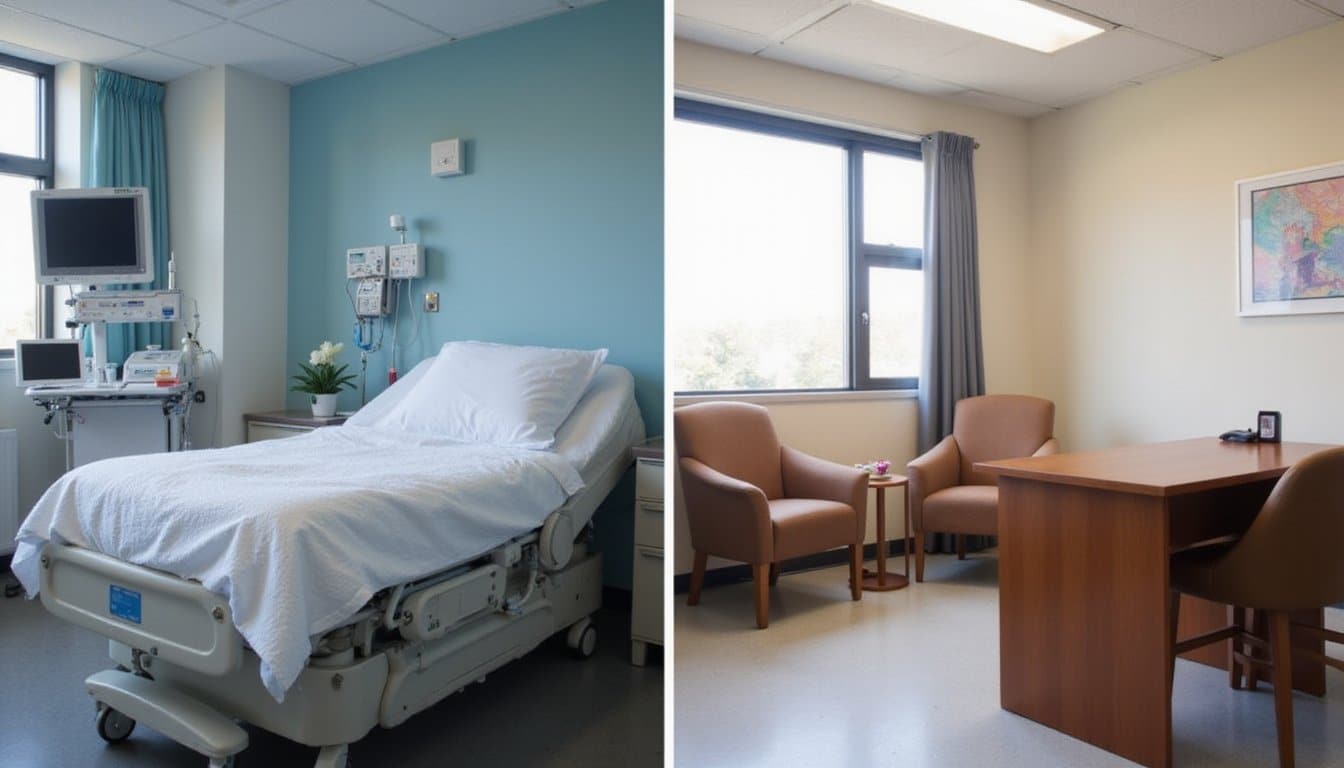
A good fit for each level of care depends on symptom severity and co-morbidity profile. If you present with severe depression and somatic co-morbidity, you’ll typically require inpatient admission, where 24/7 medical access supports complex medication management. Severe mental illness and behavioral health disorders also warrant inpatient placement. Chronic depression patients derive superior effects from intensive inpatient psychotherapy versus outpatient wait list conditions. Conversely, if you have mild to moderate depression, you’re better suited for intensive outpatient programs, which deliver effect sizes comparable to inpatient care (Cohen’s *d* 1.10, 1.76). These programs address the gap between weekly sessions and full hospitalization. Still, a substantial proportion of depressive disorder patients need hospital admission regardless of outpatient intensity, particularly when co-occurring disorders complicate the clinical picture.
How do you transition between inpatient and outpatient care
Transition between inpatient and outpatient care by securing post-discharge psychotherapy or pharmacotherapy, both linked to lower readmission and mortality rates. Although discharge from inpatient care marks clinical improvement, it’s the turning point where you’re most vulnerable to relapse. Within one year post-discharge, 21% of severe depression patients face readmission, and mortality reaches 961 per 100,000, 3.4 times the population average. Yet current sectored care structures fail you: 92% of patients don’t receive guideline-conforming follow-up, and only 33% obtain one hour of psychotherapy within a year. Care Transition Interventions can bridge this gap by coordinating psychosocial follow-up after ward discharge. You’ll want to arrange your first psychotherapy session within the first quarter, aligning with German S3 guidelines to maintain treatment gains and prevent deterioration.
How do you choose the right option for severe depression
Choose the right option for severe depression by matching treatment intensity to clinical acuity, ensuring guideline-concordant follow-up regardless of initial setting. Consider co-occurring disorders, adherence patterns, and your need for structure exceeding weekly sessions. Chronic depression favors intensive inpatient psychotherapy over wait-list conditions. Weigh mortality risk, 961 per 100,000 for severe cases, and readmission probability. Steps to access depression treatment should include a thorough evaluation of symptoms and history. Collaborating with mental health professionals can help identify the most effective strategies.
Take the First Step Toward Depression Recovery
Starting depression treatment can feel overwhelming, but knowing what to expect makes the entire process far less intimidating. Through National Depression Hotline serving Mississippi, our trained professionals are available 24/7 who can guide you toward the right Depression Treatment program built around your unique needs. Call +1 (866) 629-4564 today and take the first step toward healing.
Frequently Asked Questions
Does Insurance Typically Cover Inpatient and Outpatient Depression Treatment?
Most plans cover both, since they fall under mental health benefits, though inpatient care often needs prior authorization and has different cost-sharing. Coverage details vary, so check your benefits for copays, network facilities, and any limits. The treatment center’s admissions team can help verify your coverage before you start.
Can I Work or Attend School During Outpatient Treatment?
Often yes. Outpatient care is designed to fit around daily life, so many people keep working or studying while attending sessions. More intensive programs take up more of your week, so plan accordingly. Talk with your provider about scheduling, and consider looping in your employer or school about any flexibility you need.
What Happens if Outpatient Treatment Isn’t Working for Me?
That’s a signal to reassess, not a dead end. Your provider can adjust your therapy or medication, step up the level of care, or consider an intensive outpatient or inpatient program if symptoms are severe. Speak up early about what isn’t helping so your plan can be adjusted before things worsen.
Are There Medication Side Effects I Should Watch For?
Common ones include changes in sleep, appetite, energy, or stomach upset, especially in the first weeks, and these often ease with time. Tell your doctor about anything that concerns you rather than stopping on your own. Seek help right away for severe reactions or any new thoughts of self-harm.
How Can Family Members Support Someone During Depression Treatment?
Show up consistently, listen without judgment, and help with practical things like appointments, rides, or daily tasks. Encourage them to stick with treatment, and take any mention of hopelessness seriously. Looking after your own wellbeing matters too, so you can keep supporting them over the long haul.