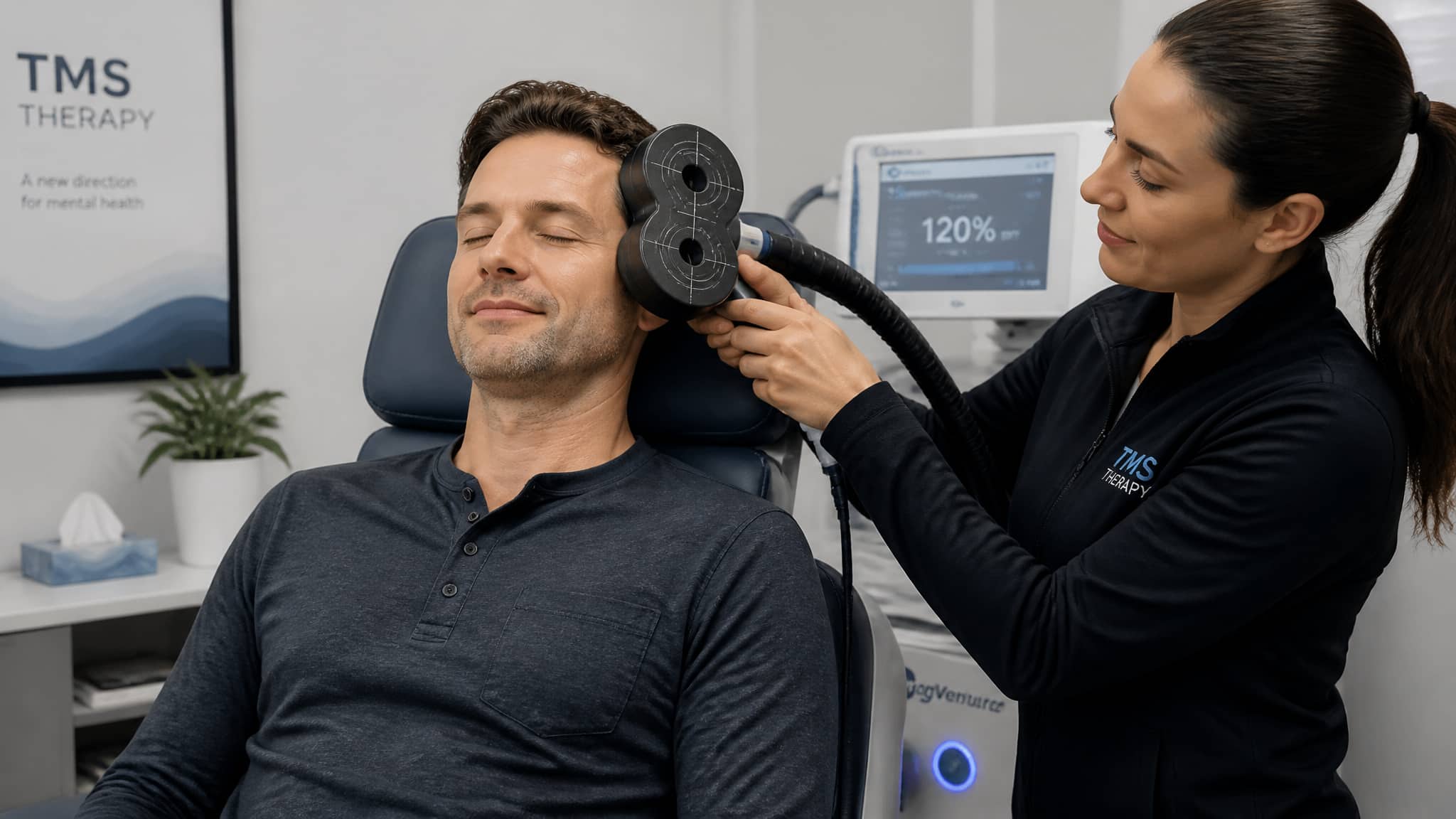
TMS therapy is a non-invasive, FDA-approved treatment for depression. You’ll sit while a technician positions an electromagnetic coil against your scalp, delivering brief magnetic pulses to mood-regulating brain regions. You’ll hear clicking sounds and feel mild tapping, but there’s no surgery, seizures, or memory loss. Sessions last 3 to 50 minutes. Response rates reach 50-55%, making it a strong option after failed antidepressants. Here’s what you should know before starting treatment.
Key Takeaways
- TMS is a non-invasive, FDA-approved depression treatment using magnetic pulses to stimulate mood-regulating brain regions, requiring no surgery or anesthesia.
- Sessions last 20 to 50 minutes, or 3 to 30 minutes with theta-burst protocols, causing mild tapping sensations and clicking sounds.
- Response rates reach 50, 55% and remission rates 30, 35%, with real-world data citing 58% response and sustained six-month remission.
- It’s typically considered after two to three failed antidepressant trials for major depressive disorder patients seeking alternatives.
- Side effects are usually mild, commonly fatigue and headaches, with rare risks like mania in bipolar disorder or hearing loss.
What is TMS therapy for depression like

TMS therapy for depression is a non-invasive, FDA-approved treatment that delivers brief magnetic pulses to stimulate mood-regulating regions of your brain. Transcranial magnetic stimulation uses an electromagnetic coil placed against your scalp to induce small electric currents that reset dysfunctional brain patterns, targeting your dorsolateral or dorsomedial prefrontal cortex.
During TMS treatment, you’ll hear repetitive clicking sounds and feel mild tingling or tapping at the coil site. Sessions typically run five days per week for four to six weeks, lasting 20 to 50 minutes each, though modern theta-burst protocols compress this to 3 to 30 minutes. No surgery, incisions, or electrode implantation is required. Unlike ECT, TMS won’t cause seizures or memory loss, making it well-tolerated.
What is TMS therapy and how does it work
TMS therapy for depression is a non-invasive, FDA-approved neuromodulation treatment that delivers brief magnetic pulses through an electromagnetic coil placed against your scalp. These pulses create a magnetic field that induces small electric currents, stimulating mood-regulating regions like the dorsolateral or dorsomedial prefrontal cortex. In depression, these areas show decreased activity, so the stimulation reactivates them, resetting dysfunctional brain patterns and promoting synaptic plasticity. Unlike ECT, this depression treatment doesn’t require surgery, cutting skin, or implanting electrodes, and it doesn’t cause seizures or memory loss. By influencing how your brain functions overall, TMS regulates mood and delivers relief when medications haven’t worked effectively. Electroconvulsive therapy, or ECT for severe depression, has been used for decades as a treatment option when other therapies fail.
Who is a good candidate for TMS therapy
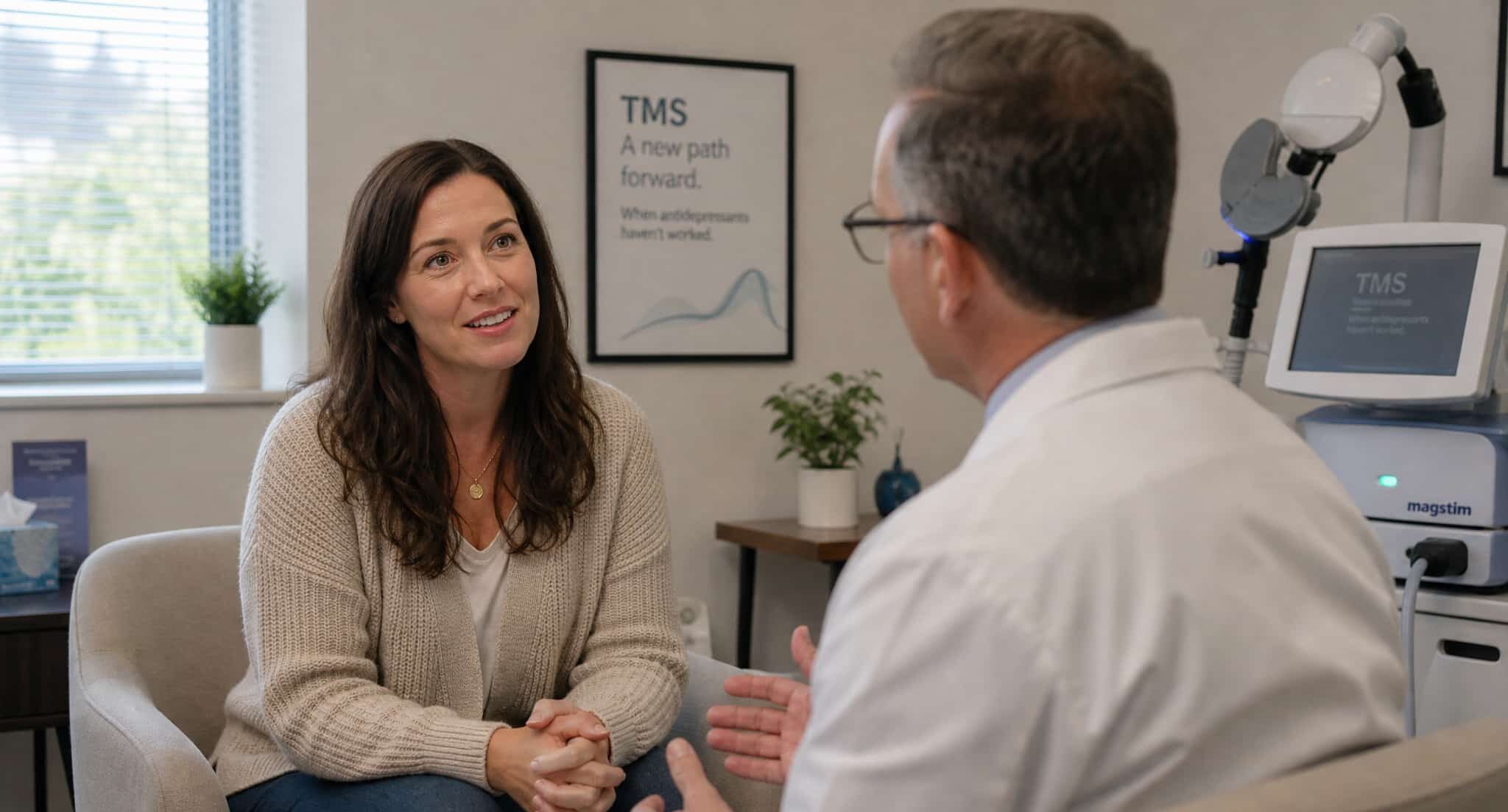
You’re likely a good candidate for TMS therapy if you’ve tried antidepressants without adequate relief, since TMS targets treatment-resistant depression. Clinicians typically consider TMS after two failed antidepressant trials and strongly recommend it after three. You’re also a strong candidate if you’ve experienced unpleasant medication side effects, since TMS offers a favorable alternative with milder, shorter-lasting effects. Effective ways to treat depression can vary from person to person, but many individuals find success through therapies like cognitive behavioral therapy or mindfulness practices.
If antidepressants haven’t brought relief, TMS may be your answer, targeting treatment-resistant depression with milder, shorter-lasting side effects.
You may qualify if you meet these criteria:
- You’ve been diagnosed with major depressive disorder (MDD).
- You’ve had inadequate response to at least two antidepressants.
- You’re seeking a non-invasive option that doesn’t cause seizures or memory loss.
- You have comorbid anxiety alongside depressed mood.
TMS is now FDA-approved for adolescent depression, expanding eligibility. If you fit these profiles, TMS warrants serious clinical consideration.
What happens during a TMS session
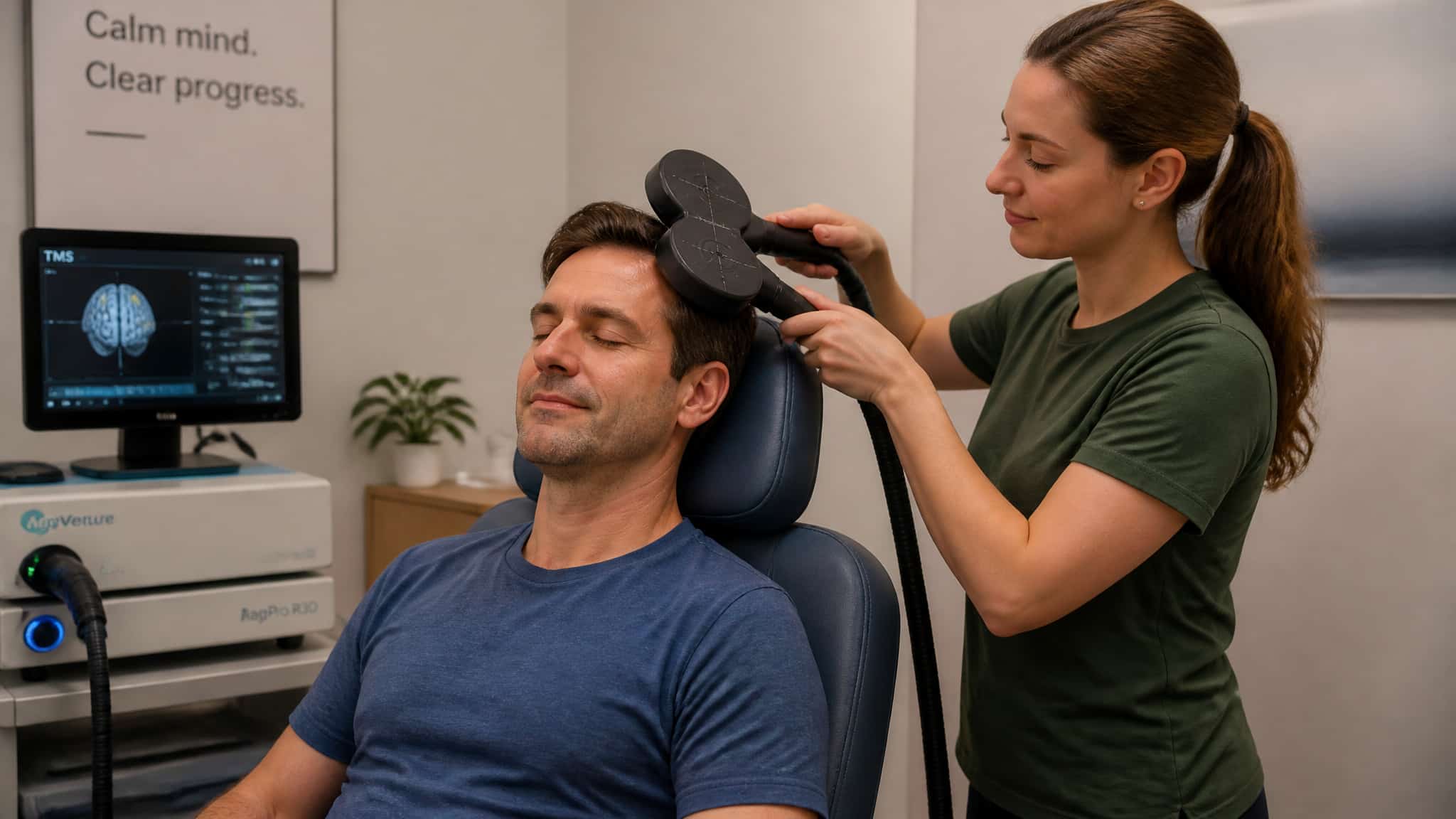
A TMS session involves a technician fitting you with a cap holding an electromagnetic coil, positioning it against your scalp over the dorsolateral or dorsomedial prefrontal cortex. The coil generates a magnetic field that induces small electric currents, stimulating mood-regulating regions with decreased activity during depression. You’ll hear repetitive clicking sounds as the pulses deliver, and you’ll feel a mild tapping or tingling sensation at the coil site. No surgery, skin cutting, or electrode implantation is involved.
Each session lasts 20 to 50 minutes, though modern theta-burst protocols compress this to just 3 to 30 minutes. You stay awake and alert throughout. The sensations typically decrease as your sessions progress, and most patients regard the experience as favorable compared to medication.
How effective is TMS therapy for depression
TMS is a reliable option for depression, particularly if you’ve exhausted other treatments. Response rates range between 50% and 55% in major depression, while remission rates fall between 30% and 35%. If you’re a non-responder to other therapies, roughly 60% still respond to standard TMS. Real-world data confirms these outcomes hold outside controlled trials. Depression treatment options can vary significantly, making it crucial to find the most suitable approach for each individual. Many patients often explore various combinations of therapy and medication to achieve optimal results.
Consider these key statistics:
The numbers speak for themselves: real-world response rates hit 58%, with over half of responders sustaining remission at six months.
- Response rates reach 58% in real-world clinical practice settings.
- Remission rates hit 37.1% in naturalistic clinical data.
- More than half of responders stay in remission at six-month follow-ups.
- Stanford’s accelerated protocol achieved 78.6% remission after just five days.
Early improvement within your first week may predict successful long-term outcomes.
What are the side effects and risks of TMS
TMS side effects are typically mild to moderate and resolve shortly after each session. You’ll likely notice temporary fatigue and headaches, the most commonly reported effects. During treatment, you’ll feel mild tingling or tapping at the coil site and hear repetitive clicking sounds, though these sensations decrease as your sessions progress. Rare risks include hearing loss if your ears aren’t well-protected, so proper protection matters. If you have bipolar disorder, you may experience emotional highs known as mania. Serious complications remain rare compared to electroconvulsive therapy. Unlike ECT, TMS doesn’t cause seizures or memory loss, and it requires no surgery, skin cutting, or electrode implantation. Overall, you’ll find TMS generally well-tolerated and favorable relative to pharmacotherapy.
How do you find TMS therapy for depression
Begin your search for TMS therapy with your prescribing psychiatrist, since TMS is typically considered after two or more failed antidepressant trials. Because it’s an FDA-approved treatment for medication-resistant major depressive disorder, you’ll need a clinical evaluation confirming your treatment history and eligibility.
To identify a provider, verify these factors:
- FDA-cleared devices and protocols, including theta-burst or accelerated options like the Stanford SAINT protocol.
- Credentialed clinicians experienced in targeting the dorsolateral or dorsomedial prefrontal cortex.
- Insurance coverage, since many plans require documented treatment-resistant depression.
- Session logistics, given the five-days-per-week, four-to-six-week commitment.
Confirm the clinic tracks response and remission outcomes, ensuring their real-world results align with established rates of 50, 55% response and 30, 37% remission.
Explore Advanced Depression Treatment Options
When traditional therapy and medication haven’t brought the relief you need, advanced treatments like TMS and ketamine can open new doors to healing. Through National Depression Hotline serving California, our trained professionals are available 24/7 who can guide you toward the right Depression Treatment program for your specific needs. Call +1 (866) 629-4564 today and take the first step toward healing.
Frequently Asked Questions
Does Insurance or Medicare Cover TMS Treatment for Depression?
Often yes, particularly for treatment-resistant depression when other options haven’t worked, though plans usually require prior authorization. Coverage and criteria vary, so check your specific benefits. The TMS clinic’s office can help confirm eligibility and handle the paperwork before you start.
Can I Drive Myself Home After a TMS Session?
Yes. Unlike some treatments, TMS doesn’t use sedation, so you stay awake and alert throughout. Most people drive themselves and return straight to work or their usual activities. Any side effects, like a mild headache, are usually short-lived.
How Long Do TMS Treatment Benefits Last After Completion?
Many people feel better for months after finishing a course, and some stay well for a year or longer. Results vary, and some benefit from maintenance sessions or continued medication to hold the gains. Your provider will help you plan follow-up care to protect your progress.
Can TMS Be Combined With Antidepressant Medications or Therapy?
Yes. TMS is often used alongside medication and therapy, and combining approaches can improve results. Your care team reviews your full treatment plan to make sure everything works together. Many people continue their usual medication throughout their TMS course.
How Much Does TMS Therapy Typically Cost per Session?
Per-session costs vary by clinic and region, and a full course usually runs several weeks of sessions, so the total adds up. Insurance often covers it for treatment-resistant depression once the criteria are met, which greatly reduces what you pay. Ask the clinic for per-session and full-course pricing, and confirm your coverage first.