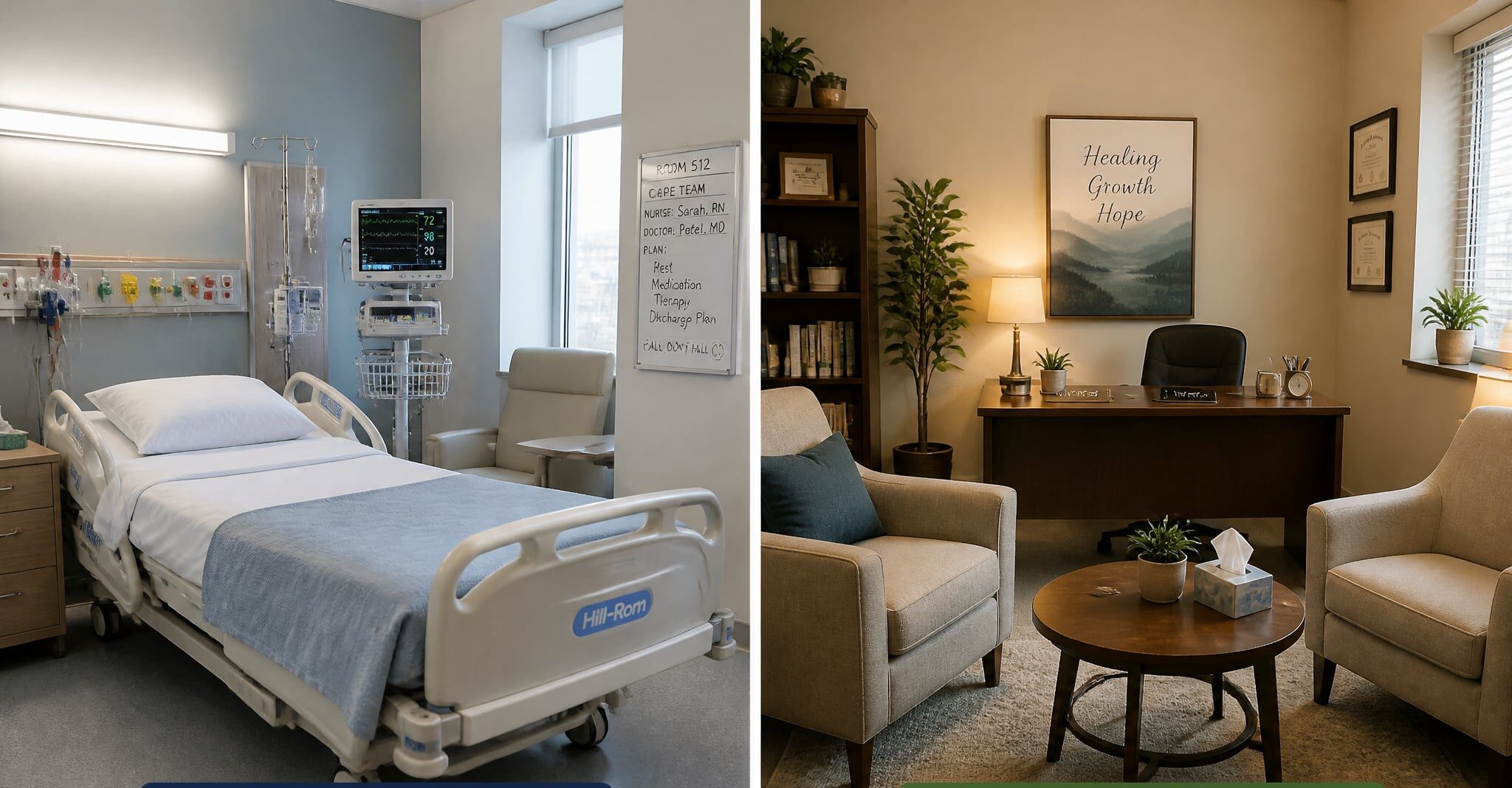
Your primary care doctor can prescribe antidepressants and actually writes 74, 79% of all antidepressant prescriptions nationally. Psychiatrists also prescribe them, particularly for complex or treatment-resistant cases. Nurse practitioners can independently prescribe in many states, while physician assistants typically need physician collaboration. Pharmacists generally can’t prescribe independently. Non-prescribing therapists like LCSWs and LPCs coordinate with prescribers but can’t write prescriptions themselves. Below, you’ll find guidance on choosing the right prescriber for your specific needs.
Primary Care Doctors Prescribe Most Antidepressants

When you visit your doctor for depression symptoms, there’s a strong chance they’ll be the one writing your prescription. Data shows your primary care doctor prescribes approximately 74, 79% of all antidepressant medications nationally. Psychiatrists and psychiatric nurse practitioners account for most of the remainder, while other mental health professionals prescribe less than 1%. Many individuals, feeling unsure about discussing their mental health, may seek options for antidepressants without prescription. This trend often leads people to explore online resources or alternative treatments.
This pattern exists because primary care clinicians serve as the first contact point for depression screening and treatment. They’re trained to evaluate symptoms, assess severity, and initiate antidepressant therapy, most commonly SSRIs, alongside management of other medical conditions. Research demonstrates that when primary care providers receive psychiatry-focused training, antidepressant prescribing increases markedly (p < 0.01), suggesting that targeted education strengthens their capacity to treat depression effectively within routine care settings. Notably, more than half of patients with severe psychological distress seek treatment from PCPs, who account for approximately 60% of mental health care delivery nationwide.
When a Psychiatrist Should Prescribe Your Antidepressant
If you’ve tried multiple antidepressants without adequate symptom relief, a psychiatrist can evaluate switching strategies, dose optimization, and alternative medication classes that primary care providers may not routinely manage. Complex medication management becomes critical when you’re taking several psychiatric or medical drugs simultaneously, since a psychiatrist’s training equips them to navigate drug interactions and tailor regimens to your specific diagnostic profile. Treatment-resistant depression, defined by failure to respond to two or more adequate medication trials, particularly warrants psychiatric involvement for specialized interventions. A psychiatrist can also monitor and treat suicidal thoughts that may accompany depression, focusing on identifying root causes and ensuring immediate safety.
Complex Medication Management
Although a primary care doctor can manage straightforward antidepressant prescriptions, a psychiatrist becomes essential once medication plans grow complex. Complex medication management typically involves multiple antidepressant trials, dose optimization, augmentation strategies, or medication combinations requiring close monitoring for side effects and drug interactions.
If your symptoms show 25% to 50% improvement during the first four weeks, your dose may need optimization to the maximum tolerable level rather than an immediate switch. However, if you experience less than 50% improvement after six to eight weeks at that maximum dose with good adherence, a medication change may be warranted. A psychiatrist can also help rule out bipolar disorder, since misdiagnosis may lead to antidepressant-induced mood switches that complicate treatment.
These repeated reassessments demand structured oversight. A psychiatrist integrates each adjustment into a thorough treatment plan, ensuring medication decisions remain systematic rather than reactive.
Treatment-Resistant Depression Cases
Some depression cases don’t respond no matter how carefully you optimize the first medication, or the second. When you’ve tried at least two antidepressants at adequate doses for six to eight weeks each and achieved less than 25% improvement, you meet the clinical threshold for treatment-resistant depression. At this point, a psychiatrist should manage your care.
A psychiatrist can distinguish true resistance from misdiagnosis, subtherapeutic dosing, or nonadherence, factors that mimic treatment failure. From there, they’ll consider evidence-based strategies: dose escalation, switching medication classes, or augmentation with adjunctive agents. If standard pharmacotherapy still fails, options like ECT, TMS, or pharmacogenomic testing become relevant. Treatment-resistant depression carries substantially higher healthcare costs and functional burden, making early psychiatric referral a pragmatic, not excessive, clinical decision.
Can Pharmacists Prescribe Antidepressants?

Pharmacists generally can’t independently prescribe antidepressants in most U.S. practice settings, though their role in medication management remains clinically significant. While can doctors prescribe antidepressants remains the standard pathway, some states permit pharmacist prescribing under collaborative practice agreements or specialized protocols within integrated health systems.
Psychiatric pharmacists with advanced training may hold broader clinical authority in academic centers or regulated practice models. However, independent antidepressant prescribing by pharmacists isn’t the norm in community pharmacy.
Your pharmacist still contributes meaningfully by screening drug interactions, identifying side effects, monitoring adherence through refill patterns, and referring you to a prescriber when symptoms worsen. Given that antidepressants require 4 to 8 weeks to demonstrate improvement, pharmacist-led counseling during this window can directly support treatment retention and outcomes.
Can Nurse Practitioners and PAs Prescribe Antidepressants?
Nurse practitioners can prescribe antidepressants in many jurisdictions, though their prescriptive authority varies by state and may require physician collaboration or supervision agreements. Physician assistants also prescribe antidepressants, but their scope of practice depends on state law and employer-specific practice rules rather than a uniform national standard. You should verify your state’s current regulations, since supervision requirements and prescribing limits differ markedly across jurisdictions and can change over time.
NP Prescribing Authority
Several types of nurse practitioners can prescribe antidepressants, though their authority varies by state law and specialty training. You should verify your state’s specific requirements before seeking care from an NP.
- Psychiatric nurse practitioners hold graduate-level mental health training and commonly prescribe SSRIs, SNRIs, and other antidepressants while managing dosing adjustments and side effect monitoring.
- Family nurse practitioners prescribe antidepressants in primary care settings, evaluating drug interactions with your existing medications and treating depression alongside other medical conditions.
- State regulatory boards control prescriptive authority, and some states require prescriptive authority certificates, pharmacology coursework, or precepted experience before NPs can prescribe.
Research indicates 65% of NPs feel sufficiently informed to select appropriate antidepressants, while 77% want additional pharmacology education, data you should consider when choosing your provider.
PA Supervision Requirements
While nurse practitioners in many states now practice independently, physician assistants typically operate under a collaborative or supervisory agreement with a licensed physician when prescribing antidepressants. This supervisory framework varies by state but generally requires a documented relationship with a supervising physician who reviews prescribing decisions.
If you’re wondering who can prescribe sertraline, PAs are fully qualified to do so within their scope of practice. They can evaluate your symptoms, diagnose depression, and initiate or adjust antidepressant therapy. However, the supervising physician must remain accessible for consultation, particularly with complex cases. Some states have reduced supervision requirements, granting PAs greater autonomy after accumulating sufficient clinical experience. You should verify your state’s specific regulations to understand how PA prescribing authority applies to your care.
State Regulation Differences
Because each state sets its own scope-of-practice laws, the authority for nurse practitioners and physician assistants to prescribe antidepressants isn’t uniform across the country. Understanding how to get a prescription for antidepressants starts with knowing your state’s specific regulations.
Key state-level variations include:
- Practice independence: Some states grant NPs full prescriptive authority, while others require physician collaboration or supervision agreements before prescribing.
- Credentialing requirements: Certain states mandate additional pharmacology coursework, controlled-substance registration, or board certification before authorizing prescriptive privileges.
- Drug category distinctions: State law often separates legend drugs from controlled substances, applying different authorization rules to each, though antidepressants typically face fewer restrictions than controlled substances.
You should verify your provider’s prescriptive authority through your state’s nursing or medical board before initiating treatment.
Which Mental Health Providers Can’t Prescribe Antidepressants?
Not every mental health provider you see can write a prescription for antidepressants. Understanding which mental health providers can’t prescribe antidepressants helps you avoid delays in treatment. Counselors, therapists, and most psychologists fall outside prescribing scope.
| Provider Type | Can Prescribe Antidepressants? |
|---|---|
| Licensed Clinical Social Workers (LCSWs) | No |
| Licensed Professional Counselors (LPCs) | No |
| Marriage and Family Therapists (MFTs) | No |
| Most Psychologists | No (exceptions in LA, IL, NM, ID, IA) |
These providers offer psychotherapy, behavioral interventions, and coping-skills training but can’t order medications. If you’re working with a non-prescribing therapist and need antidepressants, they’ll typically coordinate with a psychiatrist, primary care physician, or nurse practitioner to guarantee you get appropriate pharmacological care. Understanding the ssri prescription rules is essential for both patients and therapists. This knowledge ensures that individuals receive the correct dosage and type of medication needed for their treatment.
Choosing the Right Antidepressant Prescriber for Your Needs

How do you decide which prescriber fits your situation? Understanding how to get antidepressant prescription starts with matching your clinical needs to the right provider’s expertise. Antidepressant prescription guide can be a helpful resource when exploring your options. It provides insights into various medications and their expected outcomes.
- Start with a primary care provider when symptoms are mild to moderate, diagnosis is uncertain, or you need a thorough medical review to rule out contributing conditions.
- Choose a psychiatrist when depression is severe, treatment-resistant, or co-occurring with other mental health conditions requiring complex medication management.
- Choose a psychiatric nurse practitioner when you need specialized mental health prescribing but access to a psychiatrist is limited.
Your treatment history, symptom severity, and medication complexity should drive this decision. If your primary care provider initiates treatment without adequate response, a psychiatry referral becomes the logical next step.
Call Today and Get Real Answers About Treatment
Finding the right prescriber, the right medication, and the right level of care takes clarity and professional support. Through National Depression Hotline serving Boynton Beach, our trained professionals are available 24/7 who can guide you toward the right Depression Treatment program tailored to your situation. Call +1 (866) 629-4564 today and begin a healthier chapter in your life.
Frequently Asked Questions
Can Emergency Room Doctors Prescribe Antidepressants During a Crisis Visit?
Yes, emergency room doctors can prescribe antidepressants during a crisis visit. Research shows they can be “safely and rationally initiated” in the ED. However, you’ll typically receive a short-term bridge prescription, not a long-term treatment plan. ED clinicians have limited time for full psychiatric histories and can’t monitor your response over the weeks needed for dose titration. You’ll need follow-up with primary care or psychiatry for ongoing management.
Do You Need a Referral to Get Antidepressants From a Psychiatrist?
You typically don’t need a referral to see a psychiatrist for antidepressants. In many settings, you can self-schedule directly with a psychiatrist who’ll conduct a mental health evaluation and prescribe accordingly. However, your insurance plan or health system may require a referral from your primary care provider. PCPs sometimes refer complex cases to psychiatry based on symptom severity, treatment resistance, or diagnostic uncertainty. You should verify your specific insurer’s access requirements beforehand.
Can Telehealth Providers Legally Prescribe Antidepressants Across State Lines?
Telehealth providers can legally prescribe antidepressants across state lines only when they’re licensed in the state where you’re located during the visit. Since antidepressants aren’t controlled substances, federal DEA telemedicine restrictions generally don’t apply. However, state licensure laws create a patchwork of requirements you’ll need to verify. Some states offer special telemedicine licenses or registration pathways that facilitate cross-state prescribing, so you should confirm your provider’s licensure status before scheduling.
How Long Does an Antidepressant Prescription Typically Last Before Renewal?
You’ll typically receive a 30- or 90-day supply per fill, but your prescriber will renew the medication for at least 6, 9 months after symptoms improve. If you’ve experienced three or more depressive episodes, guidelines recommend continuing for at least 2 years, and often indefinitely. Real-world data shows a median treatment duration of 5 years, so don’t expect a short course. Your provider adjusts renewal length based on relapse history and symptom response.
Can a Dentist or Other Medical Specialist Prescribe Antidepressants?
Dentists don’t typically prescribe antidepressants, since these medications treat mental health conditions rather than dental disease. However, other medical specialists, including OB/GYNs, neurologists, and pain specialists, can prescribe antidepressants when clinically indicated for specialty-related conditions. For example, you might receive a tricyclic antidepressant from a neurologist for chronic pain. These specialists usually co-manage your treatment with your primary care doctor or psychiatrist to monitor interactions and therapeutic outcomes.