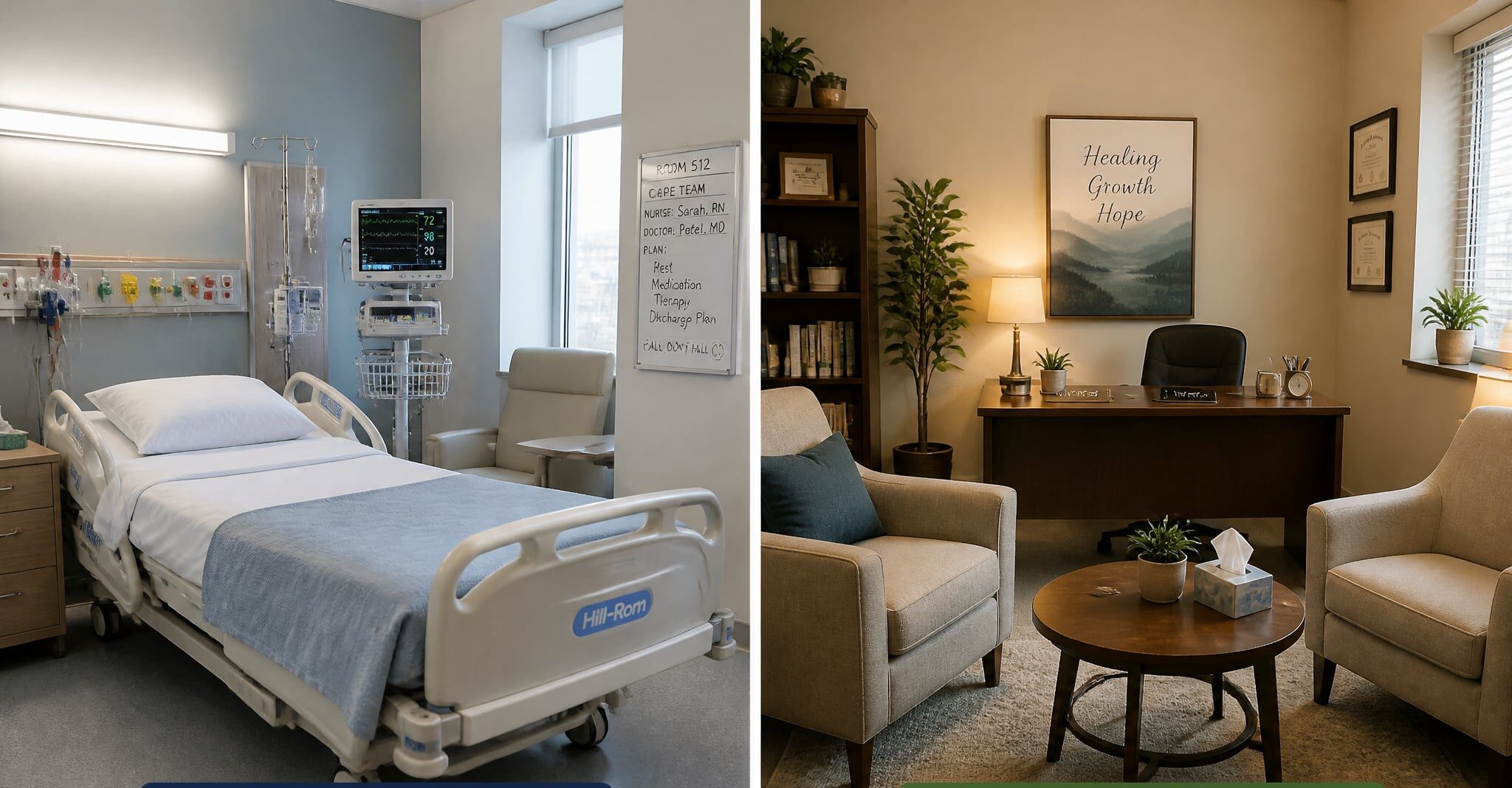
Your first depression psychiatrist visit lasts one to two hours, giving you room to be fully heard. First, a nurse checks your important , and you’ll complete questionnaires before meeting the psychiatrist. Expect a general physical exam to rule out physical causes, plus questions about your sleep, appetite, energy, and concentration. Your psychiatrist assesses symptom severity, may order lab tests, and starts shaping your treatment plan. Here’s exactly how to prepare and what comes next. Your first visit to depression therapy can be an important step toward feeling better. Being open about your experiences will help your psychiatrist tailor their approach to your needs.
Key Takeaways
- Your first appointment lasts one to two hours, longer than follow-up sessions that typically run 15, 20 minutes.
- A nurse checks vitals and you complete questionnaires before meeting the psychiatrist for evaluation.
- The psychiatrist assesses symptom severity, discussing your sleep, appetite, energy, and concentration levels.
- Expect a general physical exam and possible lab tests to rule out physical causes of depression.
- Bring your medical history, current medications with dosages, symptom timeline, and insurance details to the visit.
What happens at your first depression psychiatrist appointment

Your first depression psychiatrist appointment lasts between one and two hours, significantly longer than the 15, 20 minute follow-ups you’ll have later. A nurse practitioner or trained staff member will check your key vitals first, and you’ll complete questionnaires and assessments before meeting the psychiatrist.
Next, you’ll talk through your reasons for seeking treatment. The psychiatric evaluation covers symptom severity, mild, moderate, or severe, along with your sleep, appetite, energy, and concentration. A general physical exam helps rule out physical causes of depression, and your doctor may order or repeat lab tests. By the session’s end, you’ll begin shaping a treatment plan together.
How is a psychiatrist different from a therapist
A psychiatrist is a medical doctor who can diagnose conditions, order lab tests, perform physical exams, and prescribe medication, while a therapist provides talk therapy without prescribing medication. A depression psychiatrist focuses on the biological aspects of depression, adjusting prescriptions and monitoring how medications affect your symptoms as part of your depression treatment.
A therapist, by contrast, provides talk therapy, helping you process emotions, develop coping strategies, and address behavioral patterns through structured sessions. Therapists typically can’t prescribe medication.
In many cases, you’ll benefit from both. Your psychiatrist manages the medical side of your depression treatment, while your therapist supports you through ongoing counseling, creating a well-rounded approach to your recovery.
How do you prepare for your first psychiatrist appointment

To prepare for your first psychiatrist appointment, complete your medical history paperwork, covering both personal and family background. Prepare a detailed list of all current medications with specific dosages, and document a symptom timeline tracking changes in your mood, sleep, and energy.
Keep a journal or log noting daily mood shifts and physical symptoms like pain or stomach problems, which can signal depression. Record how symptoms affect your daily functioning and ability to work, and note major stressors involving health, finances, or relationships. Consider asking friends or family to identify behavioral changes you’ve missed.
Finally, write down specific questions about treatment options and medications, and gather your insurance details, such as Medicare cards or medical plan information.
What will the psychiatrist ask during the appointment
The psychiatrist will ask about the symptoms that brought you in, focusing on their severity to identify your most significant concerns. Expect questions rating each symptom as mild, moderate, or severe. You’ll discuss your sleep patterns, appetite shifts, energy levels, and concentration abilities. The doctor will explore current life stressors, including work, relationships, and finances, and review your past mental health history, previous diagnoses, and any hospitalizations.
Be prepared to describe past medications you’ve tried, noting their effectiveness or side effects. You’ll also address substance use, like alcohol or cannabis, answer honestly, since this makes certain your treatment stays safe. Sharing your family history of mental health conditions helps guide diagnosis. Finally, explain how your symptoms affect daily functioning and your ability to work.
What questions should you ask the psychiatrist

Ask the psychiatrist specific questions about your treatment options and how each might support you. Ask about medication details, including how it works, potential side effects, and how long before you’ll notice improvement.
Consider asking what your diagnosis means and whether therapy, medication, or a combination best matches your situation. You might ask what to do if a treatment isn’t working or if side effects become hard to manage. Questions about depression can lead to a deeper understanding of your mental health. It’s important to explore how these feelings may affect your daily life and relationships.
Don’t hesitate to clarify how follow-up appointments will operate and when you should expect results. Take notes on the doctor’s recommendations rather than relying on memory. Writing things down ensures you leave with clear, actionable guidance for moving ahead.
What happens after your first appointment
After your first appointment, you’ll typically leave with a treatment plan, though your psychiatrist may finalize it during a second session. This plan outlines how you’ll move forward, and you may or may not receive a prescription at this stage. Some medications require careful consideration, so don’t worry if your doctor holds off initially.
Take notes on the recommendations rather than relying on memory, since you’ll cover a lot of ground. Your psychiatrist will explain the available treatment options and how each might help your specific symptoms.
Expect your follow-up sessions to be notably shorter, averaging 15, 20 minutes. These visits let your doctor monitor your progress, adjust medications, and address side effects. Staying honest and consistent helps ensure your treatment stays effective over time.
How do you find a psychiatrist for depression
Find a psychiatrist for depression through a few reliable sources: your primary care doctor, your insurance provider, and verified online directories.
- Ask your primary care doctor for a referral. They know reputable psychiatrists and can share your medical history directly.
- Contact your insurance provider to verify in-network psychiatrists, reducing your out-of-pocket costs and confirming coverage before scheduling.
- Use verified online directories like the American Psychiatric Association’s tool to search by location, specialty, and patient reviews.
After you’ve identified candidates, confirm they treat depression specifically and accept new patients. Don’t hesitate to ask about their approach, availability, and telehealth options. Choosing the right fit supports better outcomes and lasting recovery. It’s also important to inquire about their depression screening process to ensure they properly assess and understand each patient’s unique situation.
Call Today and Get Answers About Care Options
From your first visit to choosing the right level of care, professional guidance helps you find the treatment path that truly works. Through National Depression Hotline serving Plymouth County, our trained professionals are available 24/7 who can guide you toward the right Depression Treatment program tailored to your situation. Call +1 (866) 629-4564 today and begin a healthier chapter in your life.
Frequently Asked Questions
Does Insurance or Medicare Cover Psychiatric Visits for Depression?
Often yes. Most insurance plans and Medicare cover psychiatric care for depression, though copays, referrals, and network rules vary. Check your specific plan for details on what’s covered and any out-of-pocket cost. The psychiatrist’s office can also help verify your benefits before the appointment.
Can I Bring a Family Member to My Appointment?
Yes, and many people find it helpful. A family member can offer support, help recall details, and share observations you might miss. The psychiatrist may also want some one-on-one time with you during the visit. Let the office know ahead of time so they can plan for it.
What Should I Do During a Mental Health Crisis?
If you or someone else is in immediate danger, call 911 or go to the nearest emergency room. You can also call or text 988 in the US to reach the Suicide and Crisis Lifeline any time, day or night. Reaching out early matters, so don’t wait to ask for help.
How Much Does a First Psychiatrist Appointment Typically Cost?
Costs vary by location, provider, and whether you use insurance. An initial visit is usually longer and priced higher than follow-ups because it involves a full evaluation. With insurance you’ll mainly pay your copay. Ask the office for their rates and check your benefits so you know what to expect.
How Long Do Antidepressants Take to Start Working?
If your psychiatrist prescribes medication, many people notice small changes in sleep, appetite, or energy within one to two weeks, with the fuller mood benefit around four to six weeks. Keep taking it during that stretch even if progress feels slow, and tell your doctor if you don’t improve so they can adjust.