When you engage with music therapy, your brain releases dopamine while reducing stress hormones and inflammation. The rhythm synchronizes your heart rate, breathing, and neural activity, activating areas responsible for emotional regulation and memory. Research shows it’s especially effective for children with autism and ADHD, adolescents needing emotional support, and college students experiencing depression, with some studies showing substantial reductions in depression scores. Understanding the specific mechanisms can help you discover which approach might work best for your situation.
The Science Behind Music Therapy’s Healing Power

Music therapy’s effectiveness stems from measurable biological and psychological mechanisms that researchers have documented across thousands of clinical trials. When you engage with music therapeutically, your brain releases dopamine, the same neurotransmitter associated with pleasure and reward. This triggers cascading effects: reduced inflammatory biomarkers, regulated heart rate, and decreased stress hormones.
The underlying neural mechanisms involve functional brain activation and enhanced network connectivity. Various musical engagement modalities, whether listening, singing, or playing instruments, stimulate multiple brain regions simultaneously, creating pathways for healing. This versatility matters because musical participation and response don’t depend on verbal ability, making it particularly effective for people who have difficulty communicating through speech.
Research shows music interventions produce small-to-medium effects on physiological measures like blood pressure, while psychological benefits range from medium-to-large. You’ll experience reduced pain intensity, lower anxiety, and improved emotional regulation. Studies demonstrate that music therapy decreases anxiety levels and improves functioning in individuals struggling with depression. These aren’t placebo effects, they’re documented biological responses your body naturally produces through structured musical experiences. Meta-analyses confirm that music-induced analgesia is a well-established phenomenon across various chronic pain conditions.
Active Engagement vs. Passive Listening: Why Participation Matters
While these biological responses occur during any musical experience, the way you engage with music profoundly shapes the therapeutic outcomes you’ll achieve.
Active engagement, singing, playing instruments, or composing, requires your direct participation rather than simply listening. When you create music, you’re accessing brain areas responsible for attention, memory, and motor control simultaneously. Research shows active music-making improves emotional regulation, builds confidence, and enhances self-expression in ways passive listening cannot match. Musicians develop structural and functional brain adaptations that non-musicians do not possess, demonstrating music’s transformative power on neural architecture.
Group activities like drumming circles or collaborative songwriting foster social bonding through oxytocin release, creating meaningful connections with others. Studies demonstrate that children who actively participate in music show better prosocial behaviors and positive affect. These musical experiences also impact neurochemical reward processes that play a significant role in mental health disorders.
While passive listening offers emotional respite and can reduce anxiety, active methods provide developmental benefits that extend beyond the session itself. For individuals recovering from injuries or neurological conditions, rhythmic auditory stimulation can effectively retrain and enhance motor skills through structured musical engagement.
How Rhythm and Sound Regulate the Brain and Body
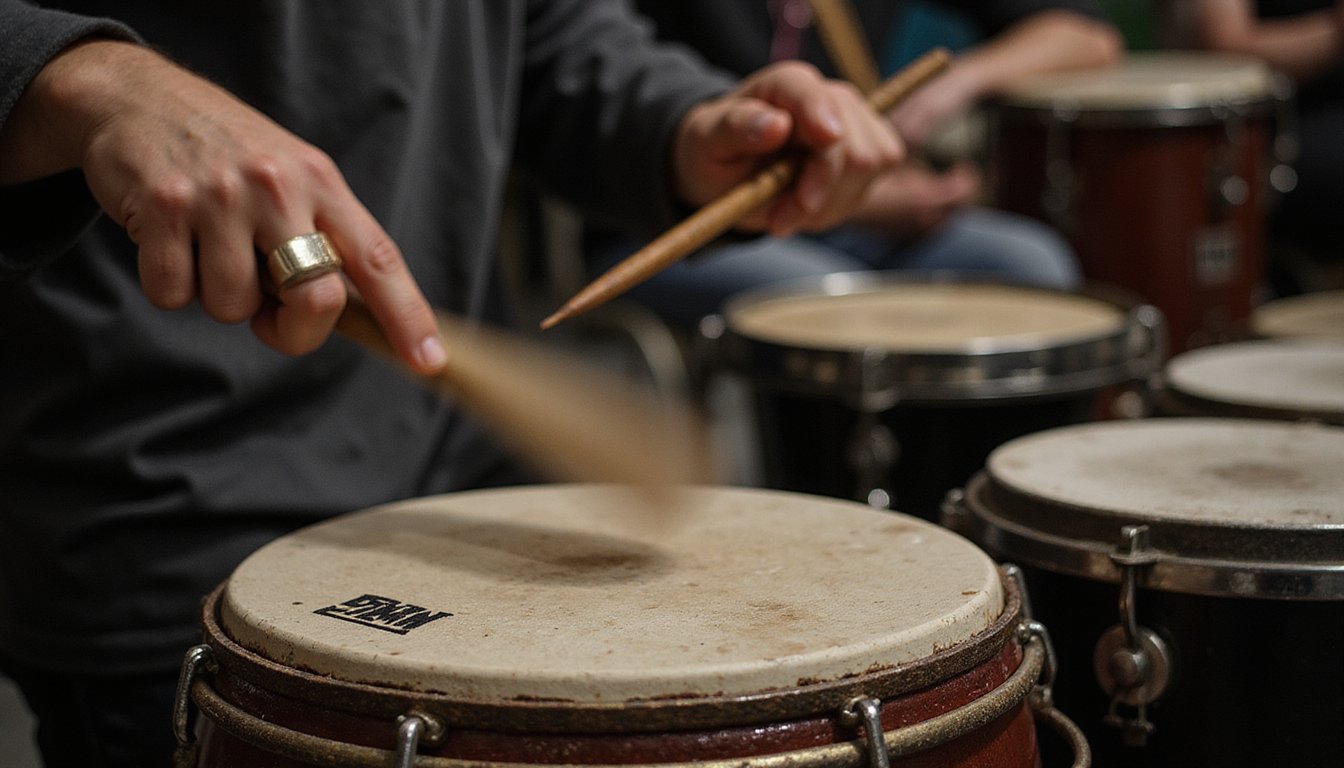
How does your brain transform rhythmic patterns into physical and emotional responses? When you hear music, your brain automatically synchronizes your heart rate, breathing, and neural activity with the beat, a process called entrainment. Your brain analyzes pauses between beats and feeds this information to your limbs while integrating feedback about position and movement. This feedforward/feedback loop improves energy efficiency, balance, coordination, and overall physical performance.
This synchronization activates multiple brain networks simultaneously, including motor regions, the limbic system, and areas governing emotional regulation. Pleasant music increases serotonin release, reduces anxiety by suppressing stress hormones, and lights up your hippocampus and amygdala for emotional processing. Slow-tempo music specifically can trigger a relaxation response, significantly lowering anxiety levels throughout your body. Music generates powerful emotional experiences through patterns of tension and resolution that keep listeners engaged and responsive.
Through therapeutic songwriting and active musical engagement, you can strengthen brain regions tied to cognition and emotional processing, fundamentally retraining neural circuits affected by trauma or mental health challenges.
Music Therapy Benefits for Children and Adolescents
From emotional regulation to cognitive development, music therapy offers children and adolescents powerful tools for growth across multiple domains. Research shows you’ll see significant improvements in emotional development when young people actively engage through singing and rhythmic activities rather than passive listening.
For adolescents with ADHD, music therapy activates serotonin pathways and improves stress coping, though researchers note more studies on attention symptoms are needed. A structured three-step protocol combining resonance frequency breathing, receptive music therapy, and active music therapy has shown promise for treating depression in ADHD populations. Group sessions create opportunities for social belonging through collaborative activities like choir participation, while sharing playlists strengthens peer connections.
The cognitive benefits are equally compelling. Rhythmic activities enhance brain maturation and correlate with improved mathematical and spatial reasoning. Twelve out of fourteen studies report statistically significant psychological benefits, and structured interventions reduce behavioral issues across diverse settings, including improvements in communication for children with autism. Additionally, vibroacoustic therapy reduced pain perception by 38% during pediatric oncology procedures, demonstrating music therapy’s effectiveness for physical symptoms as well.
Treating Depression in College Students Through Musical Interventions
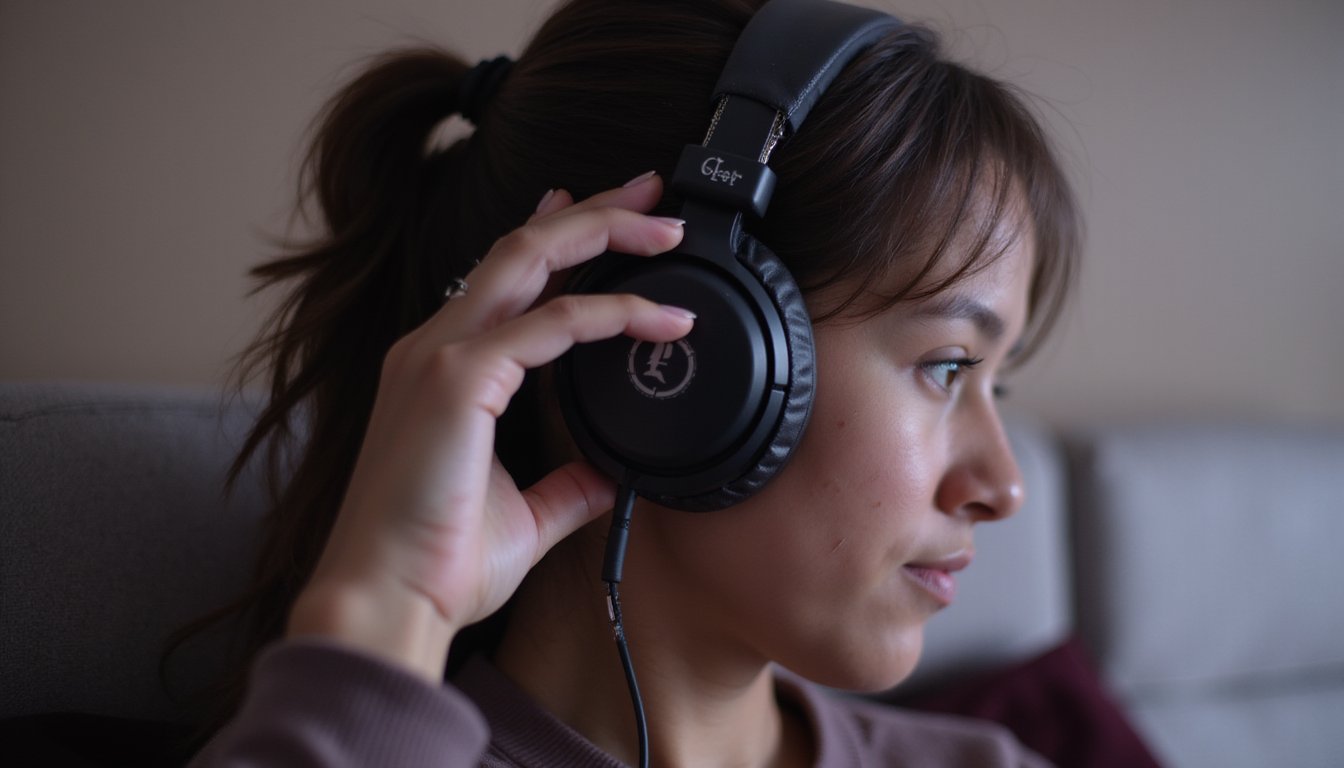
The benefits of music therapy extend well beyond childhood and adolescence, proving especially valuable during the high-stress college years. With over 37% of college students experiencing depression, you’re facing a mental health crisis that demands accessible solutions.
Research shows group music therapy implementation substantially reduces depression scores, with effect sizes reaching −1.98 in college student studies. When you receive tailored interventions for diverse students based on your musical preferences, engagement increases dramatically, yielding effect sizes as high as −2.47. Studies using the Self-rating Depression Scale and Symptom Checklist-90 have validated these improvements through rigorous psychological assessment. Medical students showed particularly pronounced responses to music therapy interventions compared to other student populations.
Music therapy addresses your specific challenges, academic anxiety, insomnia, and difficulty with emotional expression. It works through emotional catharsis and emotion regulation, helping you process feelings that might otherwise remain unexpressed. It’s cost-effective, reduces stigma compared to traditional psychotherapy, and works well alongside other treatments. You’ll find it’s a practical, evidence-based approach that meets students where they are.
Music therapy addresses your specific challenges, academic anxiety, insomnia, and difficulty with emotional expression. It works through emotional catharsis and emotion regulation, helping you process feelings that might otherwise remain unexpressed. These mechanisms explain how Music help with depression by offering a cost-effective, low-stigma alternative to traditional psychotherapy that also works well alongside other treatments. As an evidence-based approach, music therapy meets students where they are and supports emotional well-being in a practical, accessible way.
Physical Health Improvements and Pain Management Applications
When you’re dealing with chronic pain or recovering from surgery, music therapy offers tangible relief through vibroacoustic techniques that release endorphins and reduce your need for pain medication. Research shows that just 20 minutes of music can significantly decrease discomfort levels, making it an accessible complementary treatment option. If you’re working to regain motor function after a stroke or managing Parkinson’s disease, rhythmic auditory stimulation can help regulate your gait and improve coordination through steady musical beats. The RAS technique has also proven effective for traumatic brain injury patients working to restore balance and movement control. These evidence-based applications demonstrate how music therapy directly supports your body’s healing processes while making recovery more manageable.
Pain Reduction Through Vibroacoustics
Although traditional music therapy relies primarily on auditory stimulation, vibroacoustic therapy (VAT) takes a different approach by delivering low-frequency sound vibrations directly into your body’s tissues. These vibrations, typically ranging from 26 Hz to 120 Hz, interact with your muscles and nervous system to promote relaxation response enhancement and reduce perceived pain.
Research shows VAT effectively addresses both chronic conditions like fibromyalgia and acute postoperative pain. The 40 Hz frequency proves particularly beneficial because it aligns with your brain’s gamma band, supporting brain frequency entrainment that may reset disrupted neurological patterns.
During sessions lasting 20-45 minutes, you’ll experience pleasant physical sensations that can override learned pain responses. Studies demonstrate significant reductions in muscle tension, fatigue, and anxiety, with sustained benefits when you combine practitioner-led treatments with self-care practices.
Motor Recovery and Coordination
Beyond reducing pain, music therapy offers powerful tools for rebuilding movement and coordination after neurological injury or disease. Rhythmic Auditory Stimulation (RAS) synchronizes your movements to a beat, dramatically improving gait velocity and stride length in stroke and Parkinson’s patients. Meta-analyses show substantial effect sizes for these gains.
For motor impairment recovery in your upper limbs, Music-Supported Therapy produces rapid improvements in movement velocity, accuracy, and dexterity within initial sessions. These functional gains transfer to daily tasks and persist at three-month follow-up.
Multimodal rehabilitation approaches like Therapeutic Instrumental Music Performance use drums, piano, and percussion to enhance fine motor skills, hand-eye coordination, and range of motion. The underlying mechanism involves auditory-motor entrainment, which activates your motor cortex and promotes neuroplasticity essential for lasting recovery.
Why Patients Prefer Music Therapy Over Traditional Approaches
Because music therapy offers a deeply personalized experience, many patients find it more engaging than conventional treatment methods. Your therapist selects music based on your unique history and preferences, creating interventions that resonate deeply with your emotional landscape. This tailored approach strengthens therapist patient rapport while bypassing the verbal barriers that often hinder traditional psychotherapy.
You’ll find music therapy particularly appealing because it provides a non-threatening environment that promotes stigma reduction around mental health treatment. Rather than struggling to articulate difficult feelings, you can express emotions through sound and rhythm. The method engages multiple brain regions simultaneously, emotion, memory, and movement areas, offering all-encompassing benefits that talk therapy alone can’t match.
Research confirms patients report superior daily life improvements, with reduced anxiety and depression symptoms achieved through genuinely enjoyable sessions.
Current Research Limitations and Future Directions
While music therapy shows promising results, you should know that current research has significant limitations. Many studies suffer from poor reporting standards, inconsistent terminology, and inadequate descriptions of intervention protocols, making it difficult to compare findings or replicate successful treatments. Long-term effects remain largely unknown because most research focuses on short-term outcomes, and there’s still no consensus on which validated measures best capture music therapy’s benefits across motor, cognitive, and emotional domains.
Study Design Weaknesses
Even as the evidence base for music therapy expands, significant methodological weaknesses hold back definitive conclusions about its efficacy. You’ll find that small sample sizes dominate the literature, particularly for low-incidence conditions like pediatric brain injury, where recruitment challenges leave studies underpowered.
Control group selection remains problematic. When researchers compare music therapy to waitlist conditions, they can’t isolate whether benefits stem from the music itself or simply from receiving attention and engagement. Complex clinical settings introduce additional confounders, concurrent medications, other therapies, and natural recovery all muddy the waters.
Standardized reporting frameworks like TIDieR offer solutions by optimizing data collection and intervention descriptions. Multi-site consortia can pool participants for adequate statistical power, while active control conditions help distinguish music-specific effects from general therapeutic factors you’d experience in any supportive intervention.
Long-Term Effects Unknown
The promising short-term results you’ve read about often fade into uncertainty when researchers try to track outcomes beyond a few months. Most studies measure immediate improvements, but long term trajectory measurement remains rare. Follow-up data beyond six to twelve months barely exists, leaving you without clear answers about whether benefits last.
This gap matters for your treatment decisions. You might experience meaningful symptom relief during sessions, but maintenance of benefits after therapy ends isn’t systematically documented. Research across depression, dementia, and other conditions consistently shows medium-to-large short-term effects without confirming what happens later.
The underlying mechanisms driving music therapy’s effects remain unclear, which complicates predicting lasting change. Until researchers conduct longer follow-up studies, you can’t know whether improvements persist, gradually fade, or require ongoing sessions to sustain.
Frequently Asked Questions
How Long Does Each Music Therapy Session Typically Last?
Your music therapy session duration typically ranges from 30 to 60 minutes, with 45 minutes being common for many mental health settings. However, you’ll find this varies based on your specific needs, children’s sessions often run 15, 30 minutes, while specialized approaches like Guided Imagery and Music may last 90, 120 minutes. Session frequency is usually weekly, though you might attend twice weekly depending on your treatment goals.
Do I Need Musical Experience to Benefit From Music Therapy?
You don’t need any prior musical experience needed to benefit from music therapy. A musical background not necessary because sessions focus on non-musical goals like emotional regulation, stress reduction, and communication, not performance skills. You might listen to meaningful songs, discuss lyrics, play simple percussion, or use rhythmic breathing. Research shows physiological and emotional benefits occur regardless of your musical abilities. Therapists design interventions around your unique needs, making music therapy accessible to everyone.
Is Music Therapy Covered by Health Insurance Plans?
Health insurance coverage for music therapy varies widely. You’ll find that most private plans don’t list it as a standard benefit, though reimbursement policies often allow coverage when it’s part of hospital-based, rehabilitation, or behavioral health programs. Medicare and Medicaid may cover services in specific settings, and some states like Illinois now permit direct billing. If your insurance doesn’t cover sessions, you can typically use HSA or FSA funds.
How Do I Find a Qualified Music Therapist in My Area?
You can find a qualified music therapist by using CBMT’s online verification tool to confirm active MT-BC credentials. For local music therapist recommendations, check AMTA’s directory or contact your state’s music therapy association. You’ll also want to ask healthcare providers for music therapy referrals, as hospitals and rehabilitation facilities often employ credentialed practitioners. Always verify the therapist holds board certification and, where applicable, state licensure to guarantee you’re receiving evidence-based care.
Can Music Therapy Be Done Effectively Through Telehealth or Online Sessions?
Yes, you can receive effective music therapy through telehealth sessions. Research shows virtual delivery yields comparable outcomes to in-person therapy, reducing anxiety and improving emotional well-being. Online accessibility expands your options, letting you engage from comfortable, familiar spaces. Through technology integration, like screen-sharing and streaming platforms, therapists create meaningful musical interactions with you. Studies demonstrate higher adherence rates and improvements in quality of life, making telehealth a viable, evidence-supported option for your therapeutic journey.