Yes, light therapy works for non-seasonal depression. A 2024 JAMA Psychiatry meta-analysis found bright light therapy (BLT) achieved 40.7% remission versus 23.5% for controls, with response rates of 60.4% versus 38.6%. You’ll typically use a 10,000-lux light box for 30 minutes each morning. Benefits can emerge within the first week. BLT works best as an adjunct to antidepressants, not a stand-alone fix. The details below explain how you’ll maximize your results.
Key Takeaways
- Yes, bright light therapy can relieve non-seasonal depression, with a 2024 meta-analysis showing 40.7% remission versus 23.5% for controls.
- Standard protocol uses a 10,000 lux light box for about 30 minutes each morning, started soon after waking.
- Morning administration works best, likely by realigning circadian rhythms, with benefits sometimes emerging within the first week.
- Light therapy works best as an adjunct to antidepressants rather than a stand-alone replacement, though evidence quality remains low.
- Risks are minimal, but hypomania can occur in vulnerable individuals, and long-term durability beyond eight weeks is not well established.
Does Light Therapy Work for Non-Seasonal Depression
Bright light therapy (BLT) works for non-seasonal depression, with evidence supporting meaningful efficacy. A 2024 JAMA Psychiatry meta-analysis of 11 trials (858 patients) found remission rates of 40.7% versus 23.5% and response rates of 60.4% versus 38.6% for BLT compared to controls. A 2020 meta-analysis pooling 23 RCTs (1,120 participants) reported a statistically significant mild-to-moderate effect, though evidence quality was rated low. Earlier high-quality studies showed a robust SMD of -0.90, while the 2016 review found a smaller SMD of -0.41 across 20 RCTs. You should note that some evidence stays mixed. One small trial found no superiority over placebo. Overall, BLT works best as an adjunctive treatment for non-seasonal depression, not a guaranteed stand-alone solution.
How Does Light Therapy Affect the Brain and Mood
Light therapy affects the brain and mood through timing-dependent effects on brain function and mood regulation, though its antidepressant mechanisms remain incompletely mapped. When you administer bright light therapy in the morning, you’re likely influencing circadian rhythms, which helps explain why morning treatment consistently outperforms other timing strategies. This circadian realignment appears central to how BLT affects non-seasonal depression, distinguishing it from purely seasonal presentations.
You may notice benefits emerging within the first week, suggesting rapid neurobiological changes rather than gradual adaptation. BLT’s role alongside sleep deprivation responders further implicates sleep-wake and circadian pathways in mood regulation.
Because hypomania can occur, more frequently after light than control treatment, you should recognize that these mechanisms influence mood bidirectionally. Monitoring vulnerable patients remains essential, since circadian shifts can trigger mood switching.
What Does the Research Say About Non-Seasonal Depression

Research consistently supports bright light therapy in non-seasonal depression across multiple systematic reviews and meta-analyses. A 2024 analysis of 11 trials (858 patients) reported superior remission and response rates, while a 2020 update pooling 23 RCTs (1,120 participants) confirmed treatment efficacy. Effect sizes vary by study quality, ranging from small-to-moderate to moderate-to-large.
| Metric | BLT vs Control |
|---|---|
| Remission | 40.7% vs 23.5% |
| Response | 60.4% vs 38.6% |
You should note that high-quality studies reported an SMD of -0.90, whereas the 2016 pooled estimate showed SMD -0.41. Despite statistically significant findings, reviewers rate overall evidence quality as low, reflecting heterogeneous trial designs. The research positions bright light therapy as a promising adjunctive option, not universal replacement.
How Do You Use a Light Therapy Box Correctly
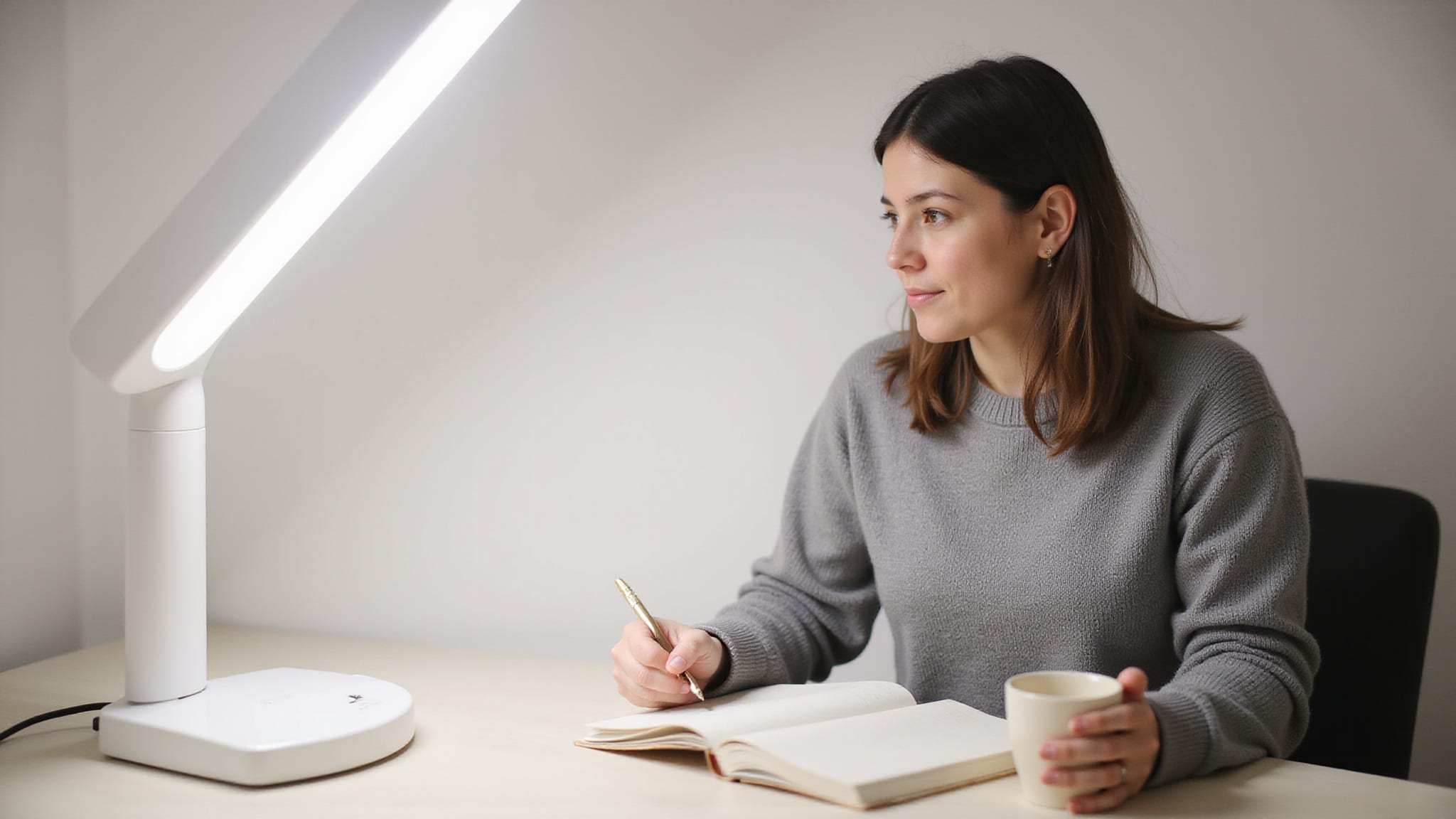
To use a light therapy box correctly, focus on three variables: intensity, timing, and positioning. For bright light therapy, you’ll typically use a light box that emits 10,000 lux, the standard intensity across most clinical trials. Timing matters significantly: morning administration has repeatedly proven more effective than other schedules, so you should begin as soon as possible after waking. A typical protocol involves about 30 minutes each morning. Positioning also affects results. Place the box directly in front of you or slightly off to the side, and don’t stare directly into the light. Benefits often appear during the first week of treatment. Most studies lasted eight weeks or less, positioning this as a short-term intervention with limited long-term durability data.
What Are the Benefits and Side Effects
Bright light therapy offers strong benefits with minimal risks. For non-seasonal depression, the efficacy safety profile favors treatment. The 2024 JAMA Psychiatry meta-analysis reported remission rates of 40.7% versus 23.5% and response rates of 60.4% versus 38.6% for bright light therapy against controls, with benefits often emerging during the first week. You’ll find bright light therapy works best as an adjunctive option alongside antidepressants, not always as a stand-alone treatment.
On safety, you’re using a non-pharmacological intervention with minimal side effects. Hypomania remains the noted adverse effect, appearing more often after light than control treatment, so monitor vulnerable patients for mood switching. The evidence quality is rated low, and durability data beyond eight weeks stay limited.
How Does Light Therapy Compare to Other Treatments
Bright light therapy works best as an adjunctive treatment rather than a standalone replacement for antidepressant medication in non-seasonal depression. Direct comparisons are limited or unavailable in older reviews, so you can’t yet position bright light therapy as a proven replacement for antidepressant medication in non-seasonal depression. What the data support is its role as an adjunctive treatment. You’ll see stronger outcomes when you pair it with antidepressants, and evidence suggests it also benefits sleep deprivation responders. The 2024 meta-analysis reported remission rates of 40.7% versus 23.5% and response rates of 60.4% versus 38.6%, with faster initial improvement when you add it. Heterogeneous designs and low-quality ratings mean you should interpret these comparative advantages cautiously.
How Do You Get Started With Light Therapy
To get started with light therapy, use a light box that emits 10,000 lux for about 30 minutes every morning, as soon as possible after you wake. Position the box in front of you or slightly off to the side, and don’t stare directly into it. Morning administration has repeatedly shown greater efficacy than other timing strategies, so anchor your treatment protocol to that window.
Approach bright light therapy as a short-term, adjunctive intervention rather than a stand-alone cure. Most trials for non-seasonal depression ran 8 weeks or less, with benefits often emerging during the first week. Monitor your response, since hypomania can occur, particularly if you’re vulnerable to mood switching. Coordinate use with your clinician alongside antidepressants or other established therapies for optimal results.
Conclusion
Bright light therapy is best known for seasonal depression, but a growing body of research suggests it can also help some people whose low mood has no seasonal pattern. It works most reliably as an add-on to other treatments, such as antidepressants or talk therapy, rather than as a cure on its own. Used consistently and under guidance, it carries few side effects and can be a practical part of a wider plan.
Call Today and Discover Therapies That Fit
Whether you’re drawn to traditional therapy or alternative approaches, expert guidance leads you to what truly helps. Through National Depression Hotline serving Palm Beach County, we connect you with licensed mental health counselors who provide the right Depression Treatment program built around your goals. Call +1 (866) 629-4564 today and begin a healthier chapter in your life.
Frequently Asked Questions
Can I Use Light Therapy While Pregnant or Breastfeeding?
Yes, you can likely use light therapy during pregnancy or breastfeeding. Some sources describe bright light therapy as well-tolerated and usable in these populations, which makes it an attractive non-pharmacological option with minimal side effects. However, keep in mind that these claims extend beyond non-seasonal depression specifically. You’ll still want monitoring, since hypomania can occur. Talk with your clinician before starting, so they can confirm it’s appropriate for you.
Are Light Therapy Boxes Covered by Health Insurance?
Coverage varies by insurer and plan. Some health plans cover light therapy boxes when a doctor prescribes them for a diagnosed condition like seasonal affective disorder, while others treat them as wellness devices and do not. Many boxes are sold over the counter and cost roughly $50 to $200. To find out, ask your insurer whether a prescribed light box qualifies as durable medical equipment, and check whether an HSA or FSA account can be used. Your doctor’s office can often help with the paperwork if a prescription is needed.
Do I Need a Prescription to Buy a Light Box?
You don’t need a prescription to buy a light box, since they’re sold as consumer wellness devices rather than regulated medical equipment. However, you shouldn’t self-treat without clinical guidance. Consult your clinician first, especially because bright light therapy carries a risk of hypomania and mood switching in vulnerable patients. Monitoring matters. A common protocol uses a 10,000 lux box for about 30 minutes each morning, positioned slightly off to the side.
Can Light Therapy Be Combined With Vitamin D Supplements?
Bright light therapy and vitamin D are often used together, and there is no known direct interaction between them. Light therapy works best as an add-on treatment, giving measurable benefit alongside antidepressants, while vitamin D may help if your levels are low, which is common in people with depression. Combining them is generally considered safe, though there is no strong proof that vitamin D adds to light therapy’s benefit. Talk with your clinician before starting supplements so they can check your levels and tailor the plan to you.