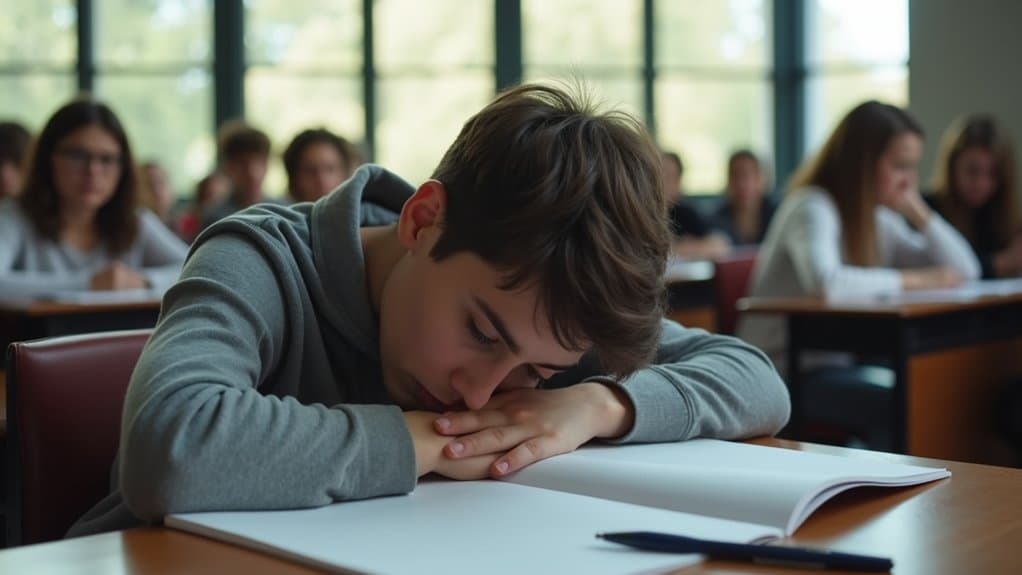
Depression affects your daily classroom life in measurable ways. It weakens your sustained attention during lectures, with focus reductions reported in 66% of undergraduate cases. You’ll likely notice memory problems, making it harder to retain information for quizzes, papers, and tests. Depression also drives absenteeism and tardiness, lowering your GPA over time. Nearly 30% of students report functioning difficulties. Understanding why this happens, and what genuinely helps, can protect your performance and well-being.
Key Takeaways
- Depression causes absenteeism, tardiness, and missed assignments, with nearly 30% of students reporting daily functioning difficulties.
- Weakened attention during lectures affects up to 66% of students, hindering note-taking and classroom engagement.
- Memory and retention problems, reported in 24% to 70.8% of cases, reduce quiz, paper, and test performance.
- Lower GPA and academic impairment result from missed classes and incomplete work, risking disengagement or dropout.
- Counseling, academic accommodations, and faculty communication help students manage symptoms and protect their daily performance.
How Does Depression Affect College Students Academically

Depression reaches into your daily academic life through absenteeism, when you find yourself skipping classes, assessments, or assignments. Nearly 30% of college students report feeling so depressed that functioning becomes difficult. As symptoms reach moderate-to-severe levels, academic impairment becomes more likely, showing up in your grades and daily performance. One study found depression’s negative impact on academic performance (β = −0.319, p = 0.001), and impairment appeared in 92% of students in a classic study. You might notice lower GPAs, fewer submitted assignments, and declining marks. These outcomes typically reflect reduced attendance, weakened focus, and incomplete work. Recognizing how depression shapes your academic experience is an important first step toward getting the support you deserve.
How Does Depression Impair Focus, Memory, and Motivation
Depression impairs focus, memory, and motivation, three cognitive functions you rely on every day in class. You might notice these effects surfacing during lectures, study sessions, and exams, quietly eroding your academic performance.
Depression quietly erodes focus, memory, and motivation, the very cognitive functions you depend on to succeed in class every day.
- Focus: Depression can weaken sustained attention, making it hard to follow instructions, take notes, or process new material. One undergraduate study reported reduced focus in 66% of cases.
- Memory: Slowed cognitive processing impairs recall, with memory problems reported in 24% to 70.8% of students across studies.
- Motivation: You may struggle to start assignments or maintain study routines, since depression reduces effort and task initiation.
- Learning: Difficulty retaining information weakens comprehension, lowering performance on quizzes, papers, and tests.
You’re not alone in this.
How Does Depression Affect Grades and Attendance
| Academic Domain | Observed Effect |
|---|---|
| Attendance | Higher absenteeism and tardiness |
| GPA | Lower grade point averages |
Depression lowers grades and attendance by increasing absenteeism and tardiness while driving down grade point averages. Missed classes and incomplete work compound into lower marks, and that downward spiral can escalate toward disengagement and dropout. Recognizing this pattern early matters, because addressing your symptoms now protects both your performance and your ability to stay enrolled.
Why Are College Students So Vulnerable to Depression
College students face heightened depression risk because they navigate a developmental period marked by significant transitions, and these overlapping stressors can overwhelm their capacity to cope. When academic, social, and personal demands converge, vulnerability to depressive symptoms rises considerably.
- Academic pressure: You’re managing rigorous coursework, high-stakes assessments, and performance expectations that can trigger chronic stress and emotional exhaustion.
- Social transitions: You’ve likely left familiar support systems, and isolation or strained peer relationships can intensify depressive symptoms.
- Financial strain: You may carry debt or work while studying, adding persistent pressure that erodes your mental well-being.
- Developmental factors: You’re in a critical maturation stage where emotional regulation and identity formation remain unstable, heightening susceptibility.
Recognizing these factors empowers earlier intervention.
How Does Academic Pressure Deepen Depression

Academic pressure deepens depression by trapping you in a self-perpetuating cycle that intensifies depressive symptoms. As pressure mounts, your concentration and motivation decline, making it harder to complete assignments or attend class. Missing this work worsens your academic standing, which amplifies feelings of hopelessness and inadequacy. These emotions further impair your focus, memory, and effort, driving performance down even more. You might withdraw from peers and instructors, reducing the support that could buffer against distress. Each missed deadline or lower grade reinforces negative self-perceptions, intensifying your depression. Because academic impairment becomes more likely at moderate-to-severe levels of depression, the cycle accelerates. Recognizing how this feedback loop operates is the first step toward interrupting it and preventing academic pressure from compounding your symptoms.
What Support and Accommodations Can Students Access
Students can access counseling services, academic accommodations, faculty support, and peer networks to manage depression and protect their academic performance. Colleges offer structured resources designed to reduce academic impairment and support your recovery. Since depression can disrupt concentration, motivation, memory, and attendance, targeted accommodations help you stay engaged and protect your grades.
Depression can disrupt your focus and motivation, but campus resources are designed to help you stay engaged and protect your grades.
- Counseling services: Access on-campus mental health clinicians for therapy, assessment, and ongoing symptom management.
- Academic accommodations: Request extended deadlines, flexible attendance policies, or testing adjustments through your disability services office.
- Faculty communication: Talk with professors early about your challenges to arrange reasonable support.
- Peer and support networks: Join campus groups that counter isolation and strengthen classroom participation.
Reaching out early improves your focus, engagement, and long-term academic outcomes.
How Do Students Find Help on and off Campus
Students find help on campus through counseling centers, disability services, and academic advisors ready to connect you with treatment and accommodations. Start with your student health portal or a quick visit to the counseling office, where clinicians can screen for depression and recommend next steps. If symptoms impair your focus, memory, or attendance, ask about referrals to off-campus providers, including therapists, psychiatrists, and community mental health clinics.
You can also use telehealth platforms and crisis hotlines when in-person options feel overwhelming. Don’t overlook your primary care physician, who can evaluate symptoms and coordinate care. Reaching out isn’t a sign of weakness, it’s an evidence-based way to protect your academic performance and well-being.
Conclusion
Depression can quietly reshape a college student’s daily life, draining focus, motivation, and energy in ways that show up as missed classes, slipping grades, and pulling away from friends. It is common, it is treatable, and it is not a reflection of weakness or ability. Reaching out to campus counseling, keeping steady routines around sleep and study, and staying connected to supportive people all help students regain their footing. If low mood is making school and daily life feel heavy, support is available. National Depression Hotline can connect you with licensed counselors who help students find relief and get back on track.
Get the Right Support for Every Age and Story
Depression looks different in teens, veterans, college students, and men, and specialized support truly makes the difference. Through National Depression Hotline serving Richmond County, we connect you with licensed mental health counselors who provide the right Depression Treatment and compassionate support for your loved one or yourself. Call +1 (866) 629-4564 today and take the first step toward healing.
Frequently Asked Questions
Can Depression Symptoms Be Mistaken for Laziness by Professors or Peers?
Yes, your depression symptoms can easily be mistaken for laziness. When depression reduces your motivation, effort, and task initiation, others might see missed assignments or skipped classes as a lack of discipline. But you’re actually experiencing clinical symptoms, impaired concentration, slowed cognitive processing, and diminished energy, not character flaws. Reduced focus and difficulty starting tasks are hallmark features of depression, so what looks like laziness is often genuine, treatable impairment.
How Can Friends Recognize Depression in a Fellow Student?
You can spot depression in a friend by noticing behavioral and cognitive shifts. Watch for missed classes, increased tardiness, or skipped assignments. You might see reduced concentration, weaker motivation, and trouble starting or completing tasks. Notice memory lapses, declining grades, and loss of interest in schoolwork. Pay attention to social withdrawal, they’re pulling away from peers and activities. If they seem persistently down and disengaged, gently check in and offer support.
Does Taking a Medical Leave Affect Financial Aid or Scholarships?
Yes, medical leave can affect your financial aid or scholarships, but the impact varies by institution and aid type. You’ll want to contact your financial aid office and scholarship providers before withdrawing, since some grants require continuous enrollment or minimum credit hours. Certain scholarships offer medical leave protections, while others may require repayment. Documenting your medical circumstances helps preserve eligibility. Acting early gives you the best chance to protect your funding.
Are Online Students Less Affected by Depression Than In-Person Students?
You aren’t necessarily less affected as an online student. Depression’s core symptoms, reduced concentration, weakened motivation, memory difficulties, and disengagement, can impair you regardless of format. Online learning might reduce commute-related tardiness, but it can also increase isolation, lowering social interaction that supports classroom engagement. You may still struggle to initiate assignments or sustain attention. If you’re experiencing these symptoms, reaching out for support matters in either setting.